Where can I buy an air compressor
Air Conditioner Filters: Selection, Function & Maintenance Guide
Introduction
Air conditioner filters are one of the most important yet often overlooked components of any cooling system. Located between the air intake and the evaporator coil, they act as the first line of defense against airborne particles that can enter your air conditioner and circulate through your living or working space. A clean and suitable filter helps maintain good indoor air quality, protects sensitive internal parts, and supports consistent cooling performance.
Many people only notice their air conditioner filter when the airflow becomes weak or the system starts working harder than usual. By then, efficiency may have already dropped, and unnecessary wear may have begun. Understanding the different types of filters, their core functions, and how to maintain them can help you improve comfort, reduce energy costs, and extend the service life of your air conditioning equipment.
Different Types of Air Conditioner Filters
Air conditioner filters are available in several designs, each suited to different usage conditions, budget levels, and air quality requirements. Choosing the right type depends on factors such as the environment you are in, the presence of pets or allergens, the level of maintenance you are willing to perform, and the specifications of your air conditioning system.
Fiberglass Disposable Air Conditioner Filters
Fiberglass filters are among the most common and affordable options found in residential and commercial air conditioning systems. They are made of layered glass fibers designed to capture larger airborne particles such as dust, lint, and visible debris before they reach the evaporator coil. Because of their simple construction, they are typically lightweight and easy to replace.
These filters are best suited for general protection of the air conditioner itself rather than high-level air purification. They are often used in systems where cost efficiency and regular replacement are the main priorities. For households or environments with relatively clean air and minimal allergen concerns, fiberglass disposable filters can be a practical choice.
Pleated Air Conditioner Filters
Pleated filters offer a larger surface area than flat fiberglass filters due to their folded or accordion-style structure. This design allows them to capture more particles while maintaining good airflow, making them a popular choice for both residential and light commercial systems. Pleated filters are generally more effective than basic fiberglass filters at trapping smaller particles.
The increased surface area also means that pleated filters can sometimes hold more dust before needing replacement, which may extend service intervals in moderately dusty environments. However, their actual service life still depends on environmental conditions, filter quality, and the operating hours of the air conditioner. For many users, pleated filters strike a useful balance between filtration performance and practicality.
Washable Reusable Air Conditioner Filters
Washable reusable filters are designed to be removed, cleaned, and reinstalled multiple times, making them an environmentally friendly option for users who want to reduce waste and lower long-term replacement costs. These filters are typically constructed from durable materials such as foam, polyester, or specialized mesh media that can withstand rinsing and drying.
While washable filters can be cost-effective over time, they require consistent maintenance. If not cleaned properly or allowed to dry completely before reinstallation, they may become less effective or even develop issues related to moisture and odor. They work well in environments where regular cleaning is manageable, but they may not provide the same high level of filtration as some disposable pleated or HEPA-style options.
High-HEPA Air Conditioner Filters
High-HEPA filters represent a higher level of air filtration and are designed to capture very fine particles, including dust mites, pollen, pet dander, mold spores, and some airborne bacteria. They are particularly useful in environments where indoor air quality is a priority, such as homes with allergy sufferers, children, elderly people, or individuals with respiratory sensitivities.
Because of their dense media, high-HEPA filters can create more airflow resistance than standard filters. This means they must be compatible with the air conditioner’s design and fan capacity. Using an incompatible high-resistance filter may reduce airflow, increase energy consumption, or cause the system to work harder. Professional advice or careful review of the equipment manual is recommended before upgrading to a high-HEPA filter.
Activated Carbon Air Conditioner Filters
Activated carbon filters are specialized filters designed to address odors, gaseous pollutants, and certain chemical smells in the air. Unlike particle filters that mainly capture dust and allergens, activated carbon media uses adsorption to reduce unwanted odors from cooking, smoking, pets, cleaning products, and industrial fumes. They are often used in combination with particle filtration for improved indoor air quality.
These filters are especially useful in homes, offices, hotels, and commercial spaces where odor control is important. However, their odor-absorbing capacity will decrease over time, so they require regular replacement. For the best results, activated carbon filters should be used according to the manufacturer’s recommendations and replaced when saturation is reached.
Core Functions of Air Conditioner Filters
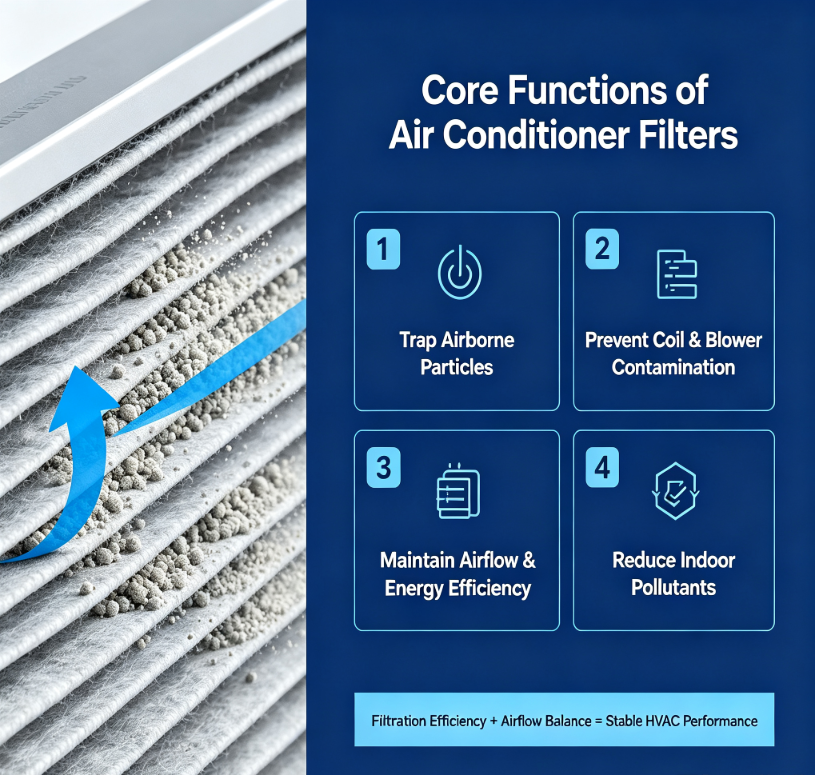
Air conditioner filters are much more than simple dust screens. They play a central role in protecting both the equipment and the indoor environment. One of their primary functions is to prevent airborne particles from reaching the evaporator coil, fan blades, and other internal components. When these parts become dirty, airflow can be restricted, heat exchange efficiency can decline, and the system may consume more energy to achieve the same cooling result.
Filters also help improve indoor air quality by capturing dust, lint, pollen, pet dander, and other particles before they recirculate through the room. This is particularly important during long cooling seasons when windows are kept closed and air is repeatedly circulated through the system. A good filter can reduce irritation for allergy sufferers and create a more comfortable living or working environment.
Another key function is the preservation of system performance. A clean filter allows the air conditioner to draw in air more easily, which reduces strain on the fan and compressor. Over time, this can help prevent premature wear and extend the overall service life of the equipment. In commercial settings where air conditioners run for extended hours, the consistent use of appropriate filters can contribute to more stable operation and lower maintenance costs.
How to Select the Right Air Conditioner Filter
Choosing the right air conditioner filter begins with understanding your system’s requirements and your indoor air quality goals. The first step is to check the air conditioner manual or consult a professional to confirm the correct filter size, installation method, and maximum acceptable pressure drop. Using the wrong size or type can lead to air leakage, reduced airflow, or damage to the system over time.
Next, consider the environment in which the air conditioner operates. If the area is prone to heavy dust, pet hair, or pollen, a pleated or high-HEPA filter may be preferable. If odor control is the main concern, an activated carbon filter could be more suitable. For users on a tight budget who need basic coil protection, a standard fiberglass filter may be sufficient.
Maintenance capability is another important factor. Washable filters can save money over time, but they require regular cleaning and drying. Disposable filters are more convenient but need to be replaced on schedule. Always balance filtration efficiency with airflow compatibility, because the highest efficiency filter is not always the best choice if it restricts airflow too much.
Maintenance Tips for Air Conditioner Filters
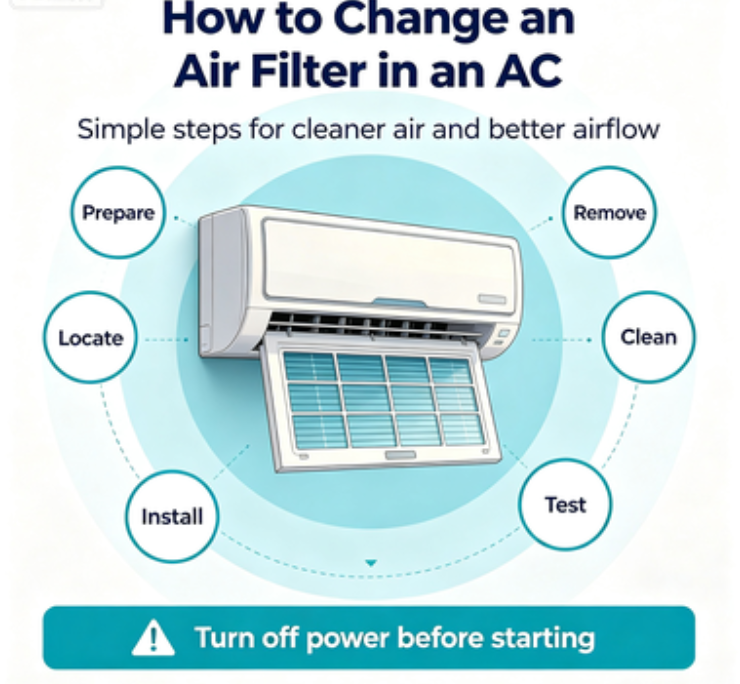
Proper maintenance is essential to keep air conditioner filters working effectively. The most basic recommendation is to inspect filters regularly, especially during peak cooling or heating seasons. Many filters should be checked every one to three months, but exact intervals depend on environmental conditions, system runtime, and filter type.
For disposable filters, replacement is usually the best option when they appear dirty, discolored, or clogged. Continuing to use a saturated filter can reduce airflow and force the air conditioner to work harder. For washable filters, follow the manufacturer’s cleaning instructions carefully, and make sure the filter is completely dry before reinstallation to prevent mold or moisture-related issues.
It is also a good idea to keep records of filter replacement or cleaning dates. This makes it easier to establish a maintenance routine and ensures that filters are not left in place for too long. Combining filter maintenance with other air conditioner checks, such as cleaning the evaporator coil and checking fan operation, can help maintain consistent performance over time.
Conclusion
Air conditioner filters are a critical component of any air conditioning system, affecting both equipment durability and indoor air quality. Understanding the different types of filters available, their core functions, and how to select and maintain them can help you make better decisions for your home or business. Whether you choose a basic fiberglass filter, a pleated filter, a washable reusable filter, a high-HEPA filter, or an activated carbon filter, the key is to match the product to your system’s requirements and your environmental needs.
Regular inspection, proper cleaning, and timely replacement are essential to preserve airflow, improve efficiency, and reduce unnecessary wear. By giving appropriate attention to air conditioner filters, you can enjoy more comfortable indoor conditions, potentially lower energy costs, and longer service life from your air conditioning equipment.
Air Compressor Filter Replacement: How Often?
Air Conditioner Filters: Benefits, Types & Maintenance Guide
Related Article