Inline Air Filters: Why Your System Needs Them
Inline Air Filters: Why Your System Needs Them
1. Introduction
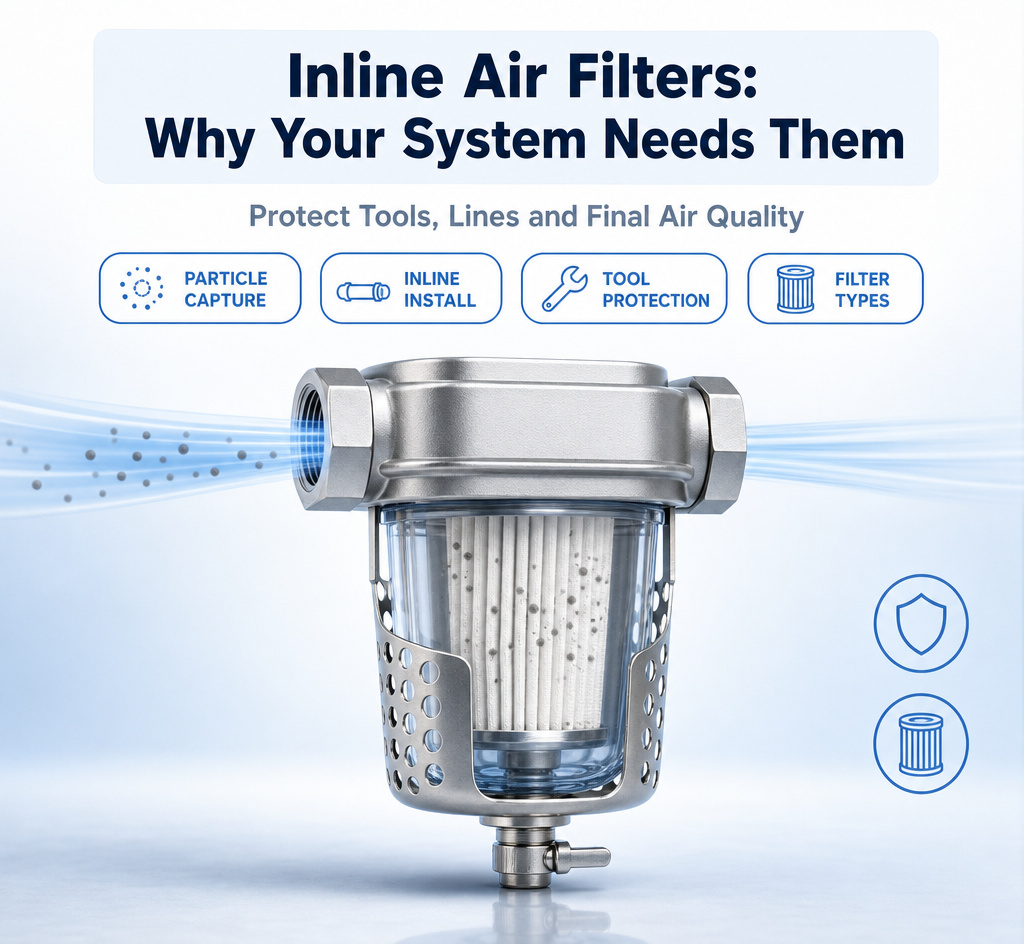
Many facility owners focus only on air compressors and dryers while ignoring inline air filters. Even after compression and drying, compressed air can still carry fine solid particles, oil aerosols, and residual water droplets. These contaminants travel through pipelines and reach your pneumatic tools, valves, cylinders and production equipment. Inline air filters are installed directly within the compressed air piping to capture these pollutants before they reach downstream equipment. For any workshop or manufacturing plant using pneumatic systems, inline filters are a simple yet critical component to maintain reliable operation.
2. What Is an Inline Air Filter?
An inline air filter is a compact purification unit mounted in-line on compressed air piping. It sits between the air compressor, air dryer and end-use equipment. As pressurized air flows through the filter housing, internal filter elements trap dust, rust particles, liquid water and oil mist. Contaminants are collected at the bottom of the filter bowl and drained manually or automatically. Unlike compressor intake filters that clean air entering the compressor, inline filters treat compressed air after compression, protecting downstream pneumatic circuits.
3. Core Benefits of Installing Inline Air Filters
3.1 Protect Pneumatic Tools & Actuators
Particles and oil residue can scratch precision seals, block small air passages and cause valves to stick. Without inline filtration, pneumatic cylinders, impact wrenches, spray guns and automated actuators wear out rapidly. Inline filters remove contaminants before they enter tool internals, preserving seal integrity and maintaining smooth tool operation. This reduces unexpected jams and pressure fluctuations during production runs.
3.2 Improve End Product Quality
For painting, powder coating, electronics assembly and food packaging, contaminated compressed air creates visible defects. Oil droplets and solid particles ruin painted surfaces, create pinholes and spoil finished goods. Inline air filters deliver clean compressed air, eliminating contamination risks and lowering scrap rates. For industries with strict air quality standards, multi-stage inline filter setups are often mandatory to meet production specifications.
3.3 Reduce Maintenance & Repair Costs
Unfiltered contaminated air accelerates component degradation, leading to frequent part replacements and downtime. Inline filters capture most pollutants upstream, reducing wear on valves, regulators and tools. Planned filter element replacement is far cheaper than repairing or replacing damaged pneumatic machinery. A properly sized inline filter system also reduces the workload on air dryers and other after-treatment equipment.
4. Different Grades of Inline Compressed Air Filters
Inline air filters are categorized by filtration efficiency, for different contaminant removal tasks:
- General particle filters: Remove large dust, rust and condensate droplets for basic workshop protection.
- Coalescing filters: Capture fine oil aerosols and tiny water droplets, widely used before spray guns and precision tools.
- Activated carbon filters: Eliminate oil vapor and odors, suitable for food, pharmaceutical and sensitive coating applications.
Most industrial systems use a staged combination: coarse particle filter first, followed by coalescing filter, and carbon filter only when ultra-clean air is required. Matching filter grade to your application prevents overspending while meeting air purity requirements.
5. Best Practices for Inline Air Filter Installation
Install inline filters after the air dryer and before branch lines leading to critical equipment. Place filters close to sensitive tools for maximum protection. Always match filter flow rate to your compressor output; undersized filters create pressure drop and restrict airflow. Install pressure gauges before and after each filter to monitor pressure differential, which indicates when elements are clogged. Mount filter housings vertically and ensure drain valves are properly configured to discharge trapped condensate.
6. Filter Element Replacement & Maintenance
Filter elements gradually clog as they capture contaminants. Rising pressure difference across the filter is the key warning sign. Follow scheduled inspection cycles, and replace clogged elements promptly. Running with blocked filters creates excessive pressure loss, increasing compressor energy consumption. Drain condensate from filter bowls regularly. Keep the filter housing clean and inspect for corrosion or cracks during each service check. Skipping element replacement defeats the purpose of inline filtration and can release trapped contaminants into your air system.
7. Conclusion
Inline air filters are essential components for any compressed air system. They remove particles, oil and water contaminants from pressurized air, protecting pneumatic equipment, stabilizing air quality and cutting long-term maintenance expenses. Whether you run a small auto repair shop or a large automated manufacturing line, inline filters prevent costly equipment damage and product defects. Select the correct filter grade, install at proper locations and stick to routine element replacement to keep your compressed air system running efficiently and reliably.
Best Air Compressor Types for Small Workshops
Compressed Air Leaks: How Much Are They Costing You?
Related Article