Air Receiver Tanks: Purpose & Sizing Basics
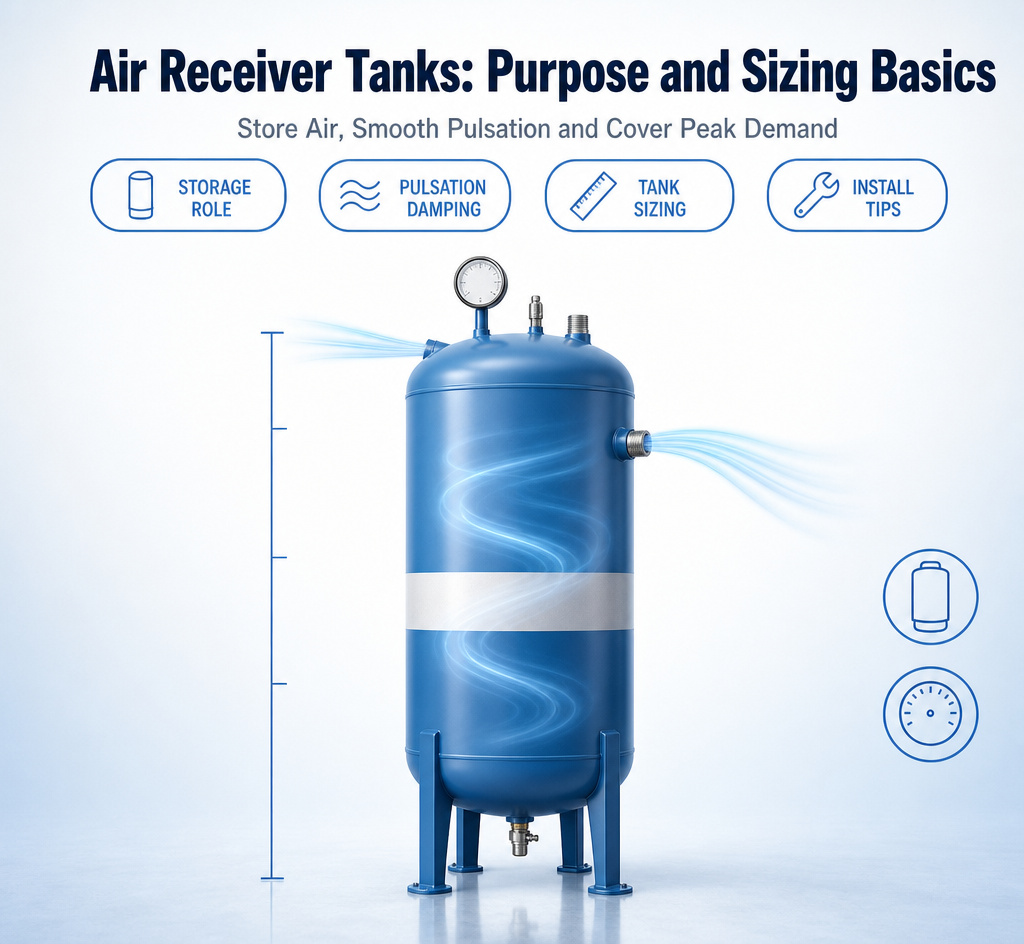
Air Receiver Tanks: Purpose & Sizing Basics
Introduction
An air receiver tank is a critical component of any compressed air system, yet it is often overlooked during system design. Many users assume the air compressor alone delivers steady pneumatic power, but the receiver tank acts as storage buffer to balance supply and demand. Choosing the correct tank volume directly impacts pressure stability, compressor runtime, energy consumption and overall system reliability. This guide explains the main functions of air receiver tanks and covers fundamental sizing principles for workshops and industrial compressed air setups.
What Is an Air Receiver Tank?
An air receiver tank, also known as a compressed air storage tank, is a pressure vessel installed after the air compressor. It stores compressed air under pressure and works alongside filters, dryers and piping networks. Receiver tanks are manufactured to withstand specific working pressure ratings and must comply with pressure vessel safety standards. They come in vertical and horizontal configurations, with different capacities ranging from small portable tank volumes to large stationary industrial vessels.
Core Purposes of Air Receiver Tanks
Pressure Stabilization
Air compressor output pressure fluctuates during loading and unloading cycles. The receiver tank smooths out these pressure spikes and drops. Without storage, sudden air use will cause rapid pressure fall, affecting pneumatic tools, painting equipment and automated production machinery. Consistent pressure improves work quality and reduces wear on downstream valves and tools.
Meet Peak Air Demand
Many compressed air systems have intermittent high demand. Blast cleaning, sandblasting, pneumatic impulse tools or batch production operations consume large air volumes for short periods. The tank releases stored compressed air to cover peak consumption, so you do not need to buy an oversized air compressor just for brief high-demand moments. This reduces capital investment and lowers running energy cost.
Condensate Separation
Hot compressed air enters the receiver tank and slows down inside the large vessel. The air cools, and water vapor condenses into liquid condensate. The tank provides space for moisture to settle at the bottom before air flows to filters and dryers. Draining condensate regularly from the tank reduces moisture load on downstream air treatment components.
Compressor Cycle Protection
Too-frequent on-off cycling is harmful to compressor motors and valves. A properly sized receiver tank extends the cycle interval. The compressor runs longer to fill the tank, then rests longer before restarting. Fewer start-stop cycles reduce motor heat buildup and mechanical fatigue, extending the compressor service life.
Sizing Basics for Air Receiver Tanks
Air receiver tank sizing depends on compressor output CFM, working pressure, and the amount of pressure drop allowed during peak demand. A simple rule of thumb for general workshop applications: 1 gallon of tank volume per 1 CFM of compressor capacity for standard systems. For systems with heavy intermittent peak loads, larger tank volumes are required.
The core sizing logic calculates how much stored air is needed to maintain acceptable pressure while the compressor catches up during peak draw. If the tank is too small, pressure drops quickly and the compressor cycles rapidly. An oversized tank can work, but it increases equipment footprint, higher initial cost and longer pressurization time during startup.
Key Factors That Affect Tank Size Selection
- Compressor free air delivery (CFM)
- Working operating pressure and allowable pressure drop
- Duration and volume of peak air consumption events
- Compressor type: reciprocating, rotary screw or scroll compressor
- Ambient temperature and condensate load
- Local pressure vessel safety regulations and inspection requirements
Installation & Maintenance Guidelines
Install the air receiver tank after the compressor and before filtration and drying equipment. Mount the tank securely and leave enough clearance for inspection and condensate draining. Every receiver tank requires a pressure relief safety valve and pressure gauge. The safety valve must be tested periodically to prevent overpressure hazards.
Drain condensate from the tank on a regular schedule. Manual drains require daily checks; automatic drain valves simplify routine maintenance. Inspect the tank interior and exterior for corrosion, rust or damage. Pressure vessels need periodic official inspections according to local safety codes.
Common Sizing & Setup Mistakes
- Selecting tank size only based on physical dimensions instead of CFM demand
- Using a tank with pressure rating lower than the compressor maximum output
- Ignoring condensate drainage, leading to internal corrosion and tank damage
- Installing too small tank for high intermittent peak air loads
- Forgetting safety relief valves or using mismatched replacement valves
- Placing the tank in confined, poorly ventilated spaces with high ambient temperature
Conclusion
Air receiver tanks are far more than simple storage vessels. They stabilize pressure, absorb peak air demand, separate condensate and reduce harmful compressor cycling. Correct sizing balances performance, energy cost and safety. Too small and your system suffers pressure fluctuations and premature compressor wear; excessively large tanks add unnecessary expense and space requirements. When designing or upgrading a compressed air system, evaluate your CFM demand and peak usage profile to pick the right receiver tank. Regular inspection, condensate draining and safety component maintenance will keep your pressure vessel reliable for years of operation.
How Often Should You Change Compressor Oil?
Primary vs. Secondary Air Filters: What's the Difference?
Related Article