Industrial Air Filters for Food & Pharma Applications
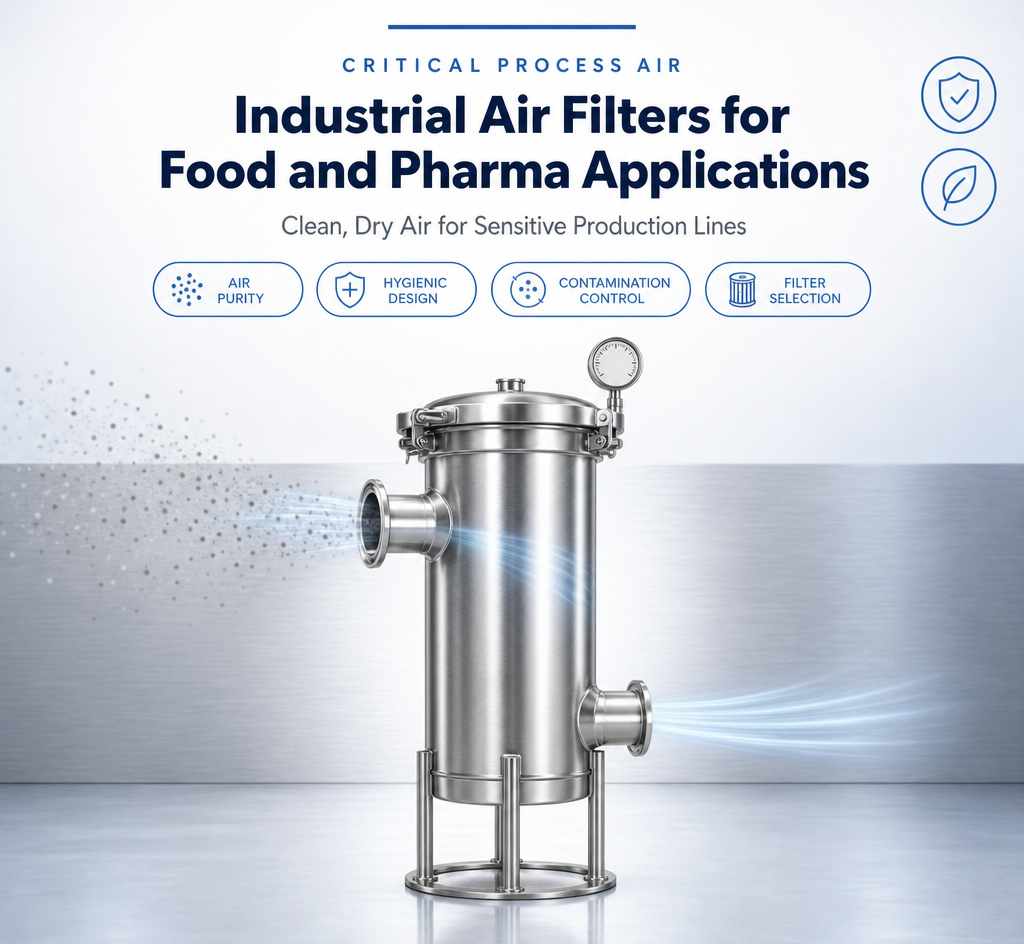
Industrial Air Filters for Food & Pharma Applications
- Introduction
- Why Food & Pharma Need Specialized Industrial Air Filters
- Core Contaminants Air Filters Remove in Food & Pharma Plants
- Common Types of Industrial Air Filters for Food & Pharma
- Key Industry Standards & Compliance Requirements
- Multi-Stage Filtration System Design Best Practices
- Filter Maintenance, Integrity Testing & Replacement
- Risks of Using Non-Compliant Filters
- Conclusion
Introduction
Food processing and pharmaceutical manufacturing operate under strict hygiene and contamination control rules. Compressed air and ambient air used in production, packaging, cleanrooms, and material handling must be free of oil, water, particles, and viable microorganisms. Standard industrial air filters are not suitable for these sensitive environments. Industrial air filters built specifically for food and pharma applications use food-grade materials, sanitary housing designs, and validated filtration performance to protect product safety, meet regulatory requirements, and prevent costly batch rejection.
Whether used for compressed air contacting food ingredients, sterile pharmaceutical filling lines, cleanroom ventilation, or powder transfer systems, these specialty filters form the frontline barrier against airborne contamination. This guide covers filter types, compliance standards, system design rules, and maintenance practices for food and pharmaceutical air filtration projects.
Why Food & Pharma Need Specialized Industrial Air Filters
General-purpose industrial filters are designed for dust removal only. They may release filter fibers, contain non-food-safe adhesives, or have crevices where bacteria and mold can grow. Food and pharma filter systems require sanitary construction, traceable material certification, and verifiable filter integrity. Stainless steel housings with smooth internal surfaces resist bacterial buildup and withstand frequent washdown cycles with sanitizing chemicals.
For pharmaceutical cleanrooms and aseptic filling zones, even low levels of microbial contamination can compromise finished drug products. In food production, oil aerosols, mold spores, and foreign particles can spoil products, create off-flavors, or trigger food safety recalls. Specialized air filters provide documented test results and validation reports required for audits and inspections.
Core Contaminants Air Filters Remove in Food & Pharma Plants
- Liquid water and water aerosols from compressed air systems
- Compressor oil aerosols and oil vapor
- Solid particulates including dust, powder residues and wear debris
- Microorganisms: bacteria, mold spores, yeast and bioaerosols
- Odors, volatile organic compounds and process vapors
Contaminants may enter from outside intake air or be generated internally by compressors, processing equipment or powder handling operations. Multi-stage filtration captures these hazards step by step before air touches raw materials, active pharmaceutical ingredients, packaging surfaces or finished goods.
Common Types of Industrial Air Filters for Food & Pharma
Pre-Filters & Coalescing Filters
Pre-filters capture large dust and debris to protect downstream high-value sterile and HEPA filters. Coalescing filters remove liquid water and oil aerosols from compressed air lines. These are installed as the first stages of compressed air purification. Coalescing filters are critical for food and pharma because oil carryover into product streams is strictly prohibited for direct-contact air applications.
Sterile Air Filters
Sterile air filters are absolute-rated membrane filters, typically 0.01μm or 0.22μm grade. They remove bacteria and microorganisms from compressed air for aseptic filling, fermentation, and direct product contact. These filter elements must pass integrity testing after installation and after steam sterilization cycles. Housings are sanitary stainless steel with drain points to avoid standing water that supports microbial growth.
HEPA Filters for Cleanrooms
HEPA filters are used for cleanroom supply air in pharmaceutical manufacturing, sterile packaging, and high-hygiene food zones. H13 and H14 HEPA grades capture 99.97% or higher of 0.3μm particles, including airborne microbes. HEPA filters require proper sealing and regular leak testing to prevent bypass contamination. They are always protected by pre-filters to extend service life and reduce operating cost.
Activated Carbon Filters
Activated carbon filters remove oil vapor, odors and volatile organic compounds. They are commonly used when compressed air cannot introduce unwanted tastes or smells into food, beverage or drug products. Carbon filters sit after coalescing filters, because liquid contamination will quickly saturate carbon media and destroy performance.
Key Industry Standards & Compliance Requirements
Filter selection must align with local and global standards. ISO 8573-1 defines compressed air purity classes for particles, water and oil. Food-grade materials must meet FDA 21 CFR requirements for food contact materials. Pharmaceutical systems follow GMP guidelines, including EU GMP Annex 1 for sterile manufacturing. Elastomers and filter media often require USP Class VI certification for pharma use.
Documentation is equally important. Facility auditors will request material certificates, filter integrity test records, batch traceability and validation reports. Filters without supporting documentation cannot be used in regulated food and pharma production zones.
Multi-Stage Filtration System Design Best Practices
A single filter cannot deliver clean, sterile air for direct product contact. A standard multi-stage sequence starts with pre-filtration, then coalescing filtration, activated carbon for vapor removal, and final sterile filtration at the point of use. Point-of-use sterile filters are highly recommended, as contamination can build up inside piping after the main compressed air treatment skid.
Design systems with low pressure drop to reduce compressor energy consumption. Install differential pressure gauges for each filter stage to monitor loading. Add drains to filter housings to remove condensate. Avoid dead legs in piping, which can trap moisture and create microbial growth sites.
Filter Maintenance, Integrity Testing & Replacement
Schedule filter replacement based on differential pressure rather than fixed calendar time. When pressure difference rises to the manufacturer’s threshold, the filter is clogged and must be replaced. Sterile and HEPA filters require integrity testing after installation and after each sterilization cycle. Common tests include bubble point or diffusion testing for membrane sterile filters.
Use proper PPE during filter changeouts to prevent cross-contamination. Keep maintenance logs with pressure readings, test results, element serial numbers and replacement dates. Dispose of used filters according to site waste protocols, especially filters exposed to active pharmaceutical ingredients or allergens in food plants.
Risks of Using Non-Compliant Filters
- Microbial contamination leading to spoiled food or failed pharmaceutical batches
- Oil carryover contaminating product streams and packaging materials
- Fiber shedding from filter media entering finished products
- Regulatory non-compliance during audits, fines or production shutdowns
- Hidden bypass leakage from poor seals or non-sanitary housings
- Unexpected filter rupture causing sudden contamination events
Conclusion
Industrial air filters for food and pharma applications are far more than ordinary dust filters. They combine sanitary construction, validated media performance and full traceability to meet strict GMP, FDA and ISO 8573 requirements. A properly designed multi-stage filtration system protects products, preserves brand reputation, and simplifies regulatory audits. Pre-filters and coalescing filters protect the expensive final sterile and HEPA stages. Regular differential pressure monitoring and integrity testing are essential to maintain reliable air quality. Investing in compliant industrial air filtration reduces the risk of product recalls, batch loss and unplanned downtime in food and pharmaceutical manufacturing operations.
Compressor Oil Filters: Why They Matter
How Often Should You Change Compressor Oil?
Related Article