Compressor Oil Filters: Why They Matter
Compressor Oil Filters: Why They Matter
- Introduction
- What Is a Compressor Oil Filter?
- Core Functions of Compressor Oil Filters
- How The Built-In Bypass Valve Works
- Common Signs of a Clogged or Failed Oil Filter
- When to Replace Compressor Oil Filters
- Risks of Skipping Oil Filter Replacement
- Tips for Selecting the Right Compressor Oil Filter
- Conclusion
Introduction
Many operators focus only on compressor oil during routine maintenance, but the oil filter is equally vital to rotary screw and reciprocating air compressors. Compressor oil filters continuously clean circulating lubricant, removing fine particles that form during normal operation. A low-quality or overdue oil filter will let contaminants circulate inside the unit, wearing down expensive rotors, bearings and seals. Even premium synthetic compressor oil cannot protect equipment if the oil filter is not functioning properly. This article explains the role of compressor oil filters, their working principle, warning signs and maintenance best practices for industrial compressed air systems.
What Is a Compressor Oil Filter?
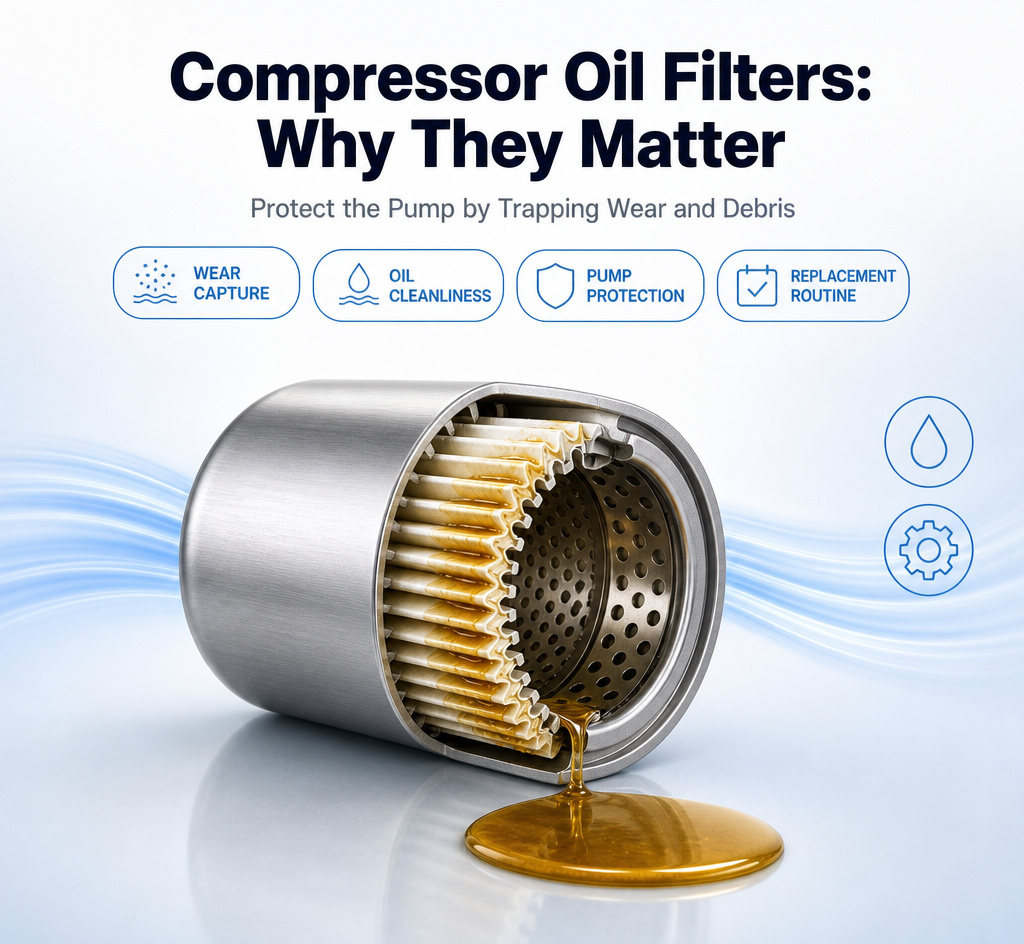
A compressor oil filter is a replaceable cartridge installed in the oil circuit of lubricated air compressors. As oil circulates from the sump through the pump, it passes through the filter media before reaching bearings, rotors and heat exchangers. Most oil filters are spin-on or insert-style cartridges with pleated filter media, designed to trap metal shavings, dust, carbon sludge and oxidation residues. These filters are engineered to withstand high operating pressure and high oil temperatures unique to air compressor working conditions, different from standard automotive oil filters.
Core Functions of Compressor Oil Filters
Capture Solid Contaminants
During compressor operation, metal wear particles form from moving parts. Dust can also enter the oil circuit through worn seals or intake air leaks. Carbon sludge and varnish build up when oil oxidizes under heat. The oil filter traps these solid particles and stops them from recirculating through the compression chamber. Without filtration, these hard particles act like abrasives, scratching precision surfaces inside the compressor.
Protect Rotating Components
Rotary screw compressor rotors and high-speed bearings have extremely tight clearances. Tiny solid particles in the oil will score rotor surfaces, damage bearing races and degrade sealing performance. The oil filter removes abrasive debris to preserve those precision clearances. This directly reduces mechanical wear and extends the service life of the most costly components inside your air compressor.
Preserve Oil Quality & Extend Oil Life
Contaminants speed up oil oxidation and breakdown. Metal particles act as catalysts that accelerate oil degradation, depleting anti-oxidant and anti-wear additives quickly. A working oil filter keeps the lubricant cleaner for longer, slowing down varnish and sludge formation. This helps maintain oil viscosity and can extend usable oil service intervals when operating conditions are stable.
Maintain Stable Oil Flow & Temperature Control
Oil serves as both lubricant and coolant inside the compressor. A clean oil filter maintains steady oil flow across the oil cooler. If the filter clogs, oil flow is restricted, heat transfer drops, and discharge temperature rises. High operating temperatures trigger overheat shutdowns and accelerate oil aging. A properly functioning oil filter supports consistent cooling and stable compressor running temperature.
How The Built-In Bypass Valve Works
Most compressor oil filters include an internal bypass safety valve. When the filter media becomes heavily clogged, pressure difference rises. Once the pressure threshold is reached, the bypass valve opens, allowing unfiltered oil to bypass the media and continue flowing to critical components. This prevents catastrophic oil starvation and seizure, but it is a last-resort emergency feature, not a normal operating mode. When the bypass valve opens, dirty oil circulates freely, causing rapid component wear. Any activation of the bypass valve means immediate filter replacement is required.
Common Signs of a Clogged or Failed Oil Filter
Monitor for these operational indicators. Increased differential pressure across the oil filter assembly is the primary warning signal. You may also notice rising compressor discharge temperature, frequent overheat alarms, or darker oil color with visible sludge buildup. In severe cases, users can see metal particles during oil sampling. If the compressor loses power or generates unusual grinding noises, inspect the oil filter and oil condition immediately. Delayed action can lead to major mechanical failure.
When to Replace Compressor Oil Filters
The oil filter must be replaced every time you perform an oil change. For rotary screw compressors, this aligns with the scheduled oil service hours. Even if the oil still looks acceptable, the filter media and sealing gaskets degrade over time. In dusty, high-humidity or high-temperature operating environments, the filter may clog faster and require replacement before the scheduled hour mark. Always follow the equipment manual and use differential pressure readings to confirm filter status.
Risks of Skipping Oil Filter Replacement
- Abrasive particles scratch rotors, bearings and shaft seals, leading to permanent mechanical damage
- Sludge buildup clogs oil coolers, oil lines and separator elements
- Oil degrades faster, shortening oil service life and increasing oil consumption
- Bypass valve activation allows unfiltered oil circulation, accelerating wear rapidly
- Higher discharge temperature and frequent emergency shutdowns
- Costly rotor overhaul or full compressor replacement in extreme cases
Tips for Selecting the Right Compressor Oil Filter
Use filter cartridges rated for the compressor’s working pressure, temperature and flow requirements. Never substitute standard automotive oil filters, as they lack the media strength and thermal rating for continuous compressor duty cycles. Check micron rating, dirt holding capacity and gasket material compatibility with your compressor oil. Install the filter correctly and lubricate the gasket before fitting to avoid oil leaks. After replacement, run the compressor and check for oil leaks and normal oil pressure.
Conclusion
Compressor oil filters are simple but indispensable parts of lubricated air compressors. They trap solid contaminants, protect precision rotors and bearings, preserve oil quality and maintain stable cooling. The built-in bypass valve protects against instant oil starvation, but it is not a reason to delay filter replacement. Always replace the oil filter together with compressor oil during maintenance. Ignoring oil filter maintenance leads to sludge, overheating and expensive component failures. Choosing the correct filter and sticking to replacement schedules protects your compressor investment and reduces unexpected downtime for your compressed air system.
Air Filter Lifespan: When to Replace It
Industrial Air Filters for Food & Pharma Applications
Related Article