Best Air Compressor Types for Small Workshops
Best Air Compressor Types for Small Workshops
1. Introduction
Small workshops, including auto repair garages, woodworking shops, metal fabrication studios and home DIY workspaces, rely on air compressors to power nailers, impact wrenches, sanders, spray guns and blow-off tools. Choosing the wrong compressor type leads to insufficient airflow, frequent shutdowns, excessive noise or wasted budget. This guide breaks down the most suitable air compressor types for small workshops, their pros and cons, and practical advice to help you select equipment that matches your workload, space and budget.
2. Key Factors for Small Workshop Air Compressor Selection
Before comparing compressor types, define your core requirements. First, calculate total CFM demand for tools you plan to operate, either one at a time or simultaneously. Second, check available floor space, as some models require large footprint and ventilation. Noise level is another critical consideration for small enclosed workshops. Budget, duty cycle and air quality needs also influence your final decision. Many small workshop operators prioritize low maintenance and simple operation over maximum continuous output.
3. Reciprocating (Piston) Air Compressors
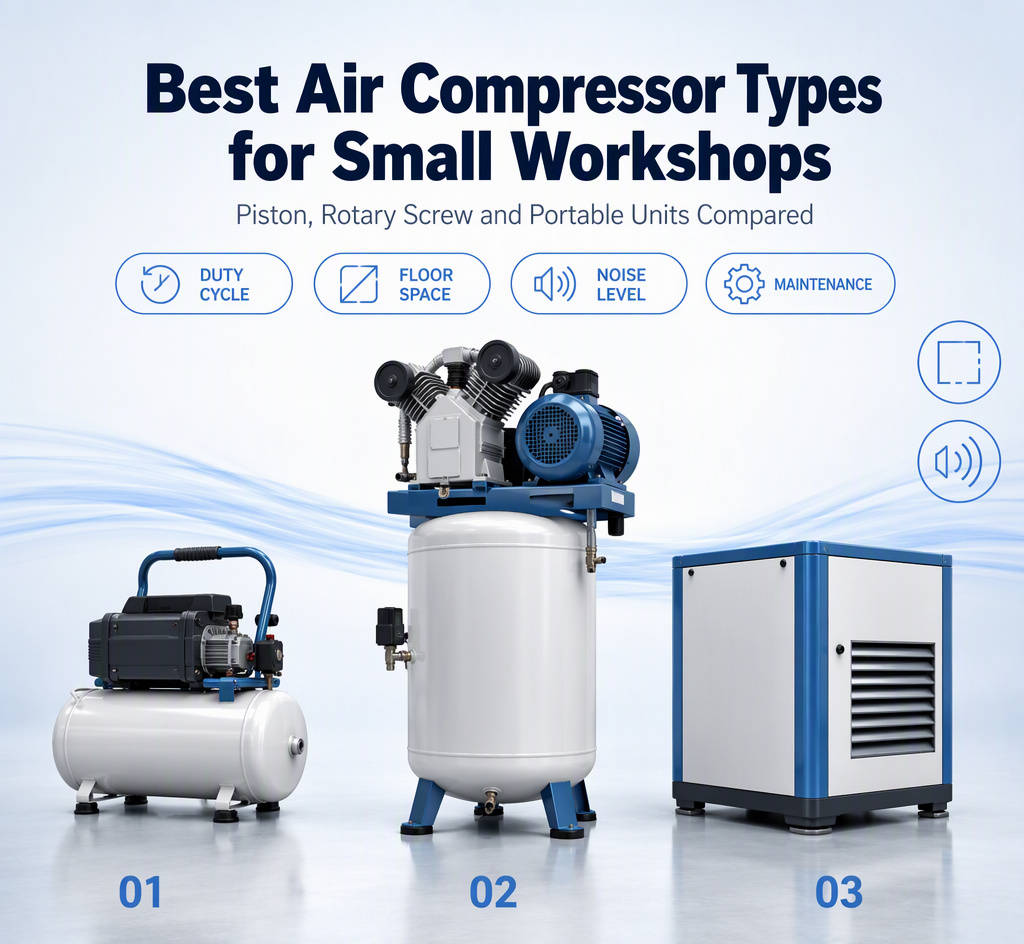
Piston compressors are the traditional workhorse for small and medium workshops. They use pistons inside cylinders to compress air and store pressurized air in a tank. Most piston compressors are built with high pressure tolerance and lower upfront cost. They work well for intermittent use, where tools run for short periods and there is time for the tank to recharge.
Common drawbacks include higher noise and heat generation. Their duty cycle is limited; running continuously for long stretches can cause overheating. Two-stage piston models deliver higher pressure and better durability than single-stage versions, ideal for metalworking and auto repair workshops needing higher PSI.
3.1 Oil-Free Piston Compressors
Oil-free piston compressors eliminate oil carry-over into compressed air. These units are perfect for painting, wood finishing and jobs where oil contamination will ruin finished surfaces. They are lighter and require less routine oil changes. The tradeoff is shorter service life under heavy continuous use and slightly higher purchase price compared to standard oil-lubricated piston compressors.
4. Rotary Screw Air Compressors
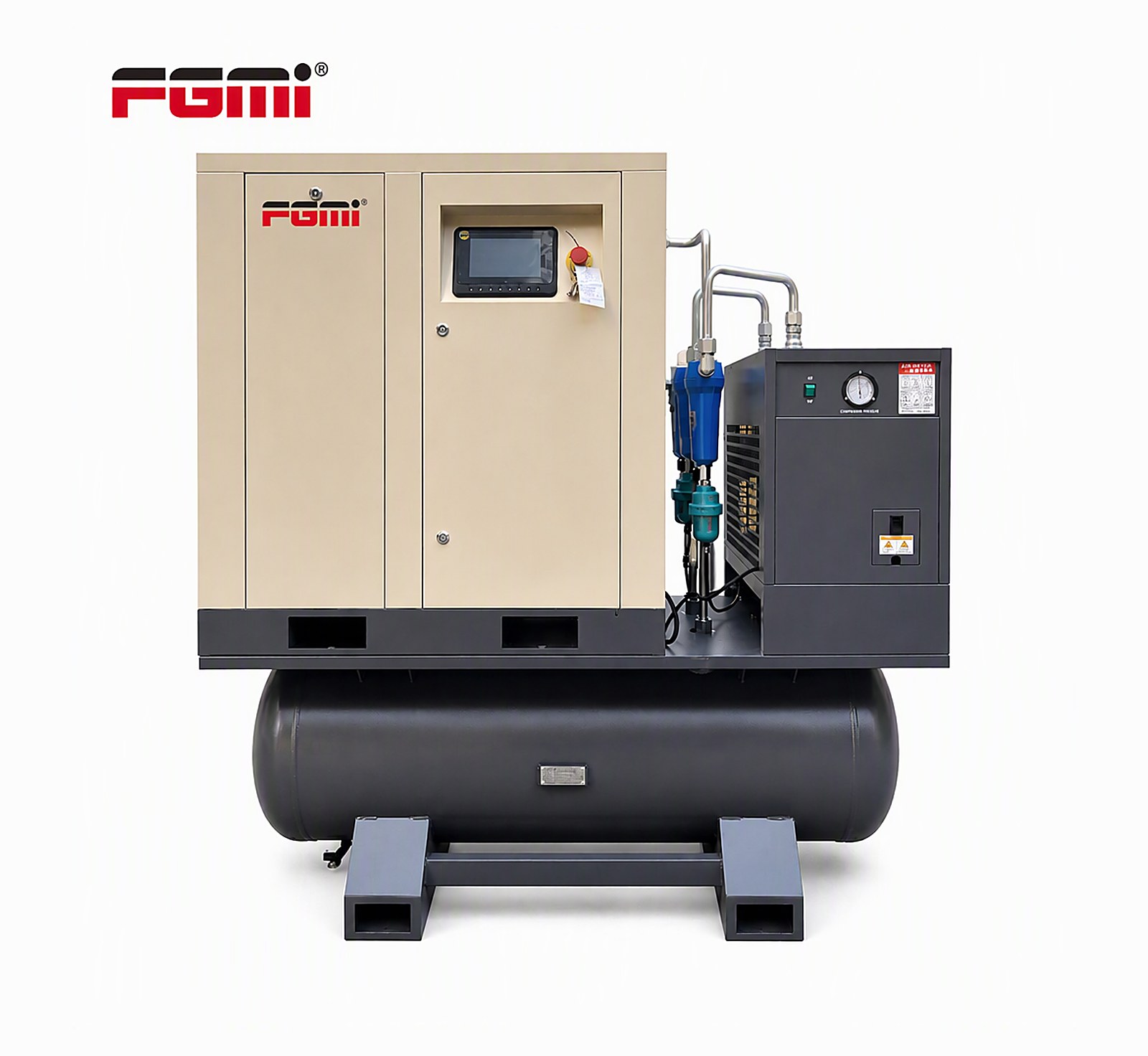
Rotary screw compressors are designed for continuous duty cycles. Instead of pistons, twin rotating screws compress air smoothly with less vibration and lower noise. For small workshops with all-day pneumatic tool operation, rotary screw models deliver stable constant airflow without overheating.
The main downside is higher initial investment cost. They also need regular maintenance of oil, filters and separators. Rotary screw compressors are recommended if your workshop runs multiple pneumatic tools for hours daily, such as busy auto repair shops or continuous fabrication work. For light intermittent use, piston compressors usually offer better value.
5. Portable Pancake & Hotdog Compressors
Pancake and hotdog style portable compressors are compact, lightweight piston units with small air tanks. They are easy to move around the workshop or job site. These low-CFM machines are suitable for light tasks: nail guns, blow guns, tire inflation and occasional small paint jobs.
Because of small tank volume and low CFM output, they struggle with high-demand tools such as large impact wrenches or continuous sanders. They are best for hobby workshops and light-duty tasks, not heavy daily production work.
6. How to Match Compressor Type With Your Workshop Tasks
- Hobby & light DIY work: Portable pancake or hotdog compressors
- Intermittent auto repair, metalwork: Oil-lubricated single or two-stage piston compressors
- Painting, coating and clean-air jobs: Oil-free piston compressors with inline filtration
- Heavy daily continuous operation: Rotary screw air compressors
Always remember to add a safety margin on CFM. It is better to choose a compressor with slightly higher airflow than your calculated requirement, to account for pipe leaks and pressure drop.
7. Essential Accessories for Small Workshop Compressors
A compressor alone cannot guarantee stable clean air. Small workshops should add supporting after-treatment parts. Inline air filters remove particles and oil mist. Air dryers reduce moisture to prevent rust and paint defects. Pressure regulators stabilize air pressure for sensitive tools. Automatic drain valves remove condensate from the tank and filter bowls, reducing manual maintenance work. High-quality hoses and quick couplings also help minimize air leaks in small workshop piping networks.
8. Conclusion
For most small workshops, piston compressors offer the best balance of price, simplicity and performance for intermittent workloads. Portable compact models fit light DIY tasks, while two-stage piston units handle heavier auto and metal fabrication work. Rotary screw compressors are worth the higher investment only when your workshop requires non-stop airflow every day. Pair your selected compressor with proper filters and drying accessories to protect tools and improve output quality. Matching compressor type to your actual workshop workload will avoid overspending and prevent frustrating pressure shortages during operation.
How to Winterize Your Air Compressor for Cold Seasons
Inline Air Filters: Why Your System Needs Them
Related Article