How to Choose the Right Air Compressor Size
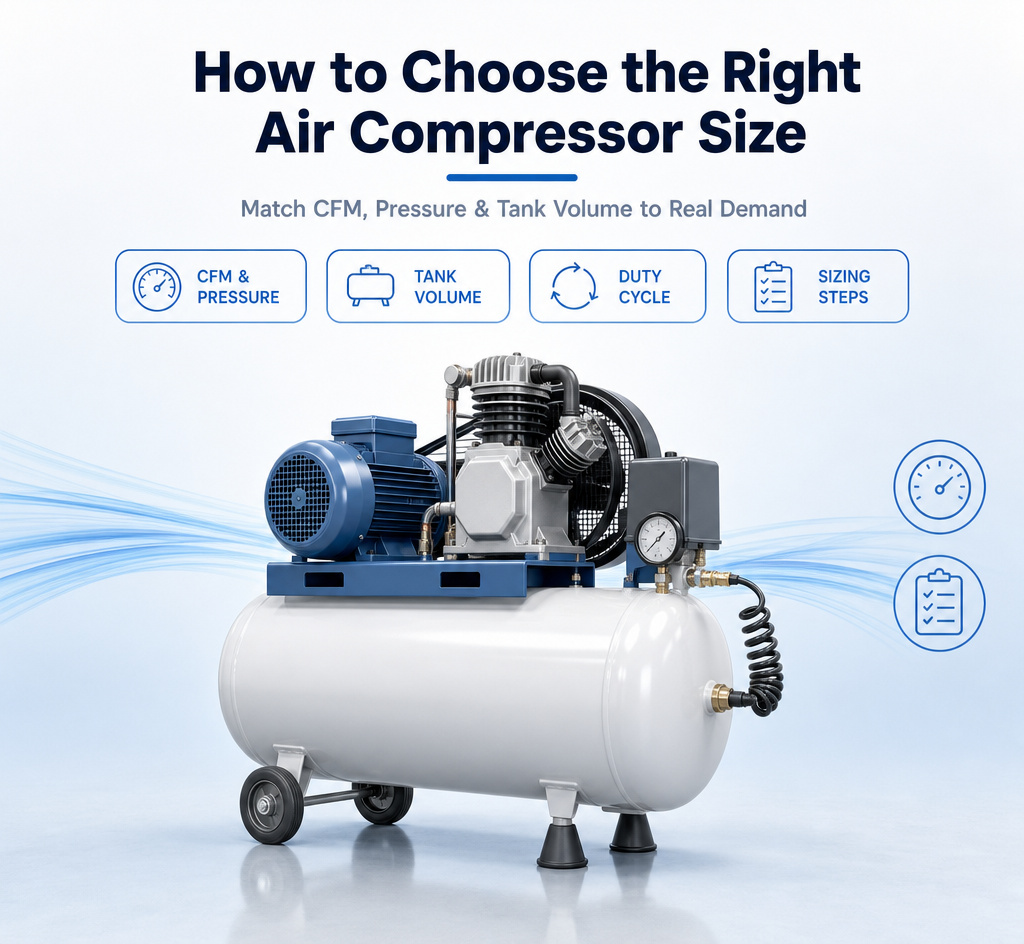
How to Choose the Right Air Compressor Size
1. Introduction
Selecting the right air compressor size is one of the most important decisions for any workshop, construction site, manufacturing facility or DIY project. An air compressor that is too small will struggle to maintain steady air pressure, causing tools to run slowly or stop working mid-operation. Oversized units waste energy, increase upfront investment and create unnecessary maintenance burdens. This guide breaks down how to properly size an air compressor based on your air demand, working pressure and operating conditions, helping you match equipment to your actual operational needs.
2. Why Air Compressor Size Matters
Air compressor size is not only about physical dimensions. In industrial and pneumatic applications, size refers to the air delivery capacity and pressure rating. When the compressor cannot supply enough air volume to match your pneumatic tools, you will experience pressure drops. Continuous pressure fluctuation reduces work efficiency, shortens tool service life and may affect finished product quality in painting, sandblasting and assembly tasks.
On the other hand, purchasing an oversized compressor leads to frequent cycling. The machine will turn on and off repeatedly, consuming extra electricity and accelerating wear on internal components. For long-term stable operation, matching compressor output with your total air requirement is essential.
3. Key Technical Terms for Sizing Air Compressors
3.1 CFM: Cubic Feet per Minute
CFM measures the volume of compressed air the compressor can deliver each minute. This is the core metric for sizing. Every pneumatic tool has its own CFM requirement. When multiple tools run at the same time, you need to sum their individual CFM values and add a safety margin. Always use the actual working CFM rating instead of theoretical displacement numbers for calculation.
3.2 PSI: Pounds per Square Inch
PSI represents air pressure. Most handheld pneumatic tools work between 70 PSI and 120 PSI. Some heavy-duty equipment such as sandblasters or industrial painting systems demand higher continuous pressure. Your selected compressor must maintain stable pressure above the minimum requirement of your tools during continuous operation.
3.3 Air Tank Capacity
The air tank acts as storage buffer. A larger tank can store more compressed air to handle short peak air demand. If your work involves intermittent high air consumption, a bigger tank helps reduce compressor startup frequency. For continuous, non-stop air usage, tank size becomes less important while the CFM output of the compressor takes priority.
4. Step-by-Step Guide to Calculate Required Compressor Size
Follow these simple steps to work out your minimum air compressor specification:
- List all pneumatic tools you plan to use at the same time, note each tool’s CFM and PSI rating.
- Add together all CFM values of simultaneously operated tools.
- Add 30% to the total CFM as safety margin to account for pipe leakage, pressure loss and future tool expansion.
- Confirm the maximum working PSI needed for your equipment.
- Select a compressor with rated CFM higher than your calculated total value and pressure rating exceeding your tool requirement.
For example, if you run an impact wrench requiring 5 CFM and a pneumatic sander requiring 4 CFM together, the base total is 9 CFM. After adding 30% safety buffer, you need a compressor delivering at least 11.7 CFM continuously.
5. Size Recommendations by Application
Small DIY and Home Garage Use
For occasional tasks such as tire inflation, nail guns and small blow guns, low CFM portable compressors are suitable. Small tank models with 1-6 CFM output meet these light intermittent jobs.
Auto Repair and Small Workshop
Auto shops use impact wrenches, pneumatic grinders and spray guns. Continuous use usually requires 10-20 CFM compressors with medium size air tanks to maintain stable pressure.
Industrial Manufacturing and Heavy Construction
Production lines, sandblasting and heavy pneumatic machinery demand high continuous air flow. Rotary screw compressors with high CFM ratings are commonly selected for these heavy-duty continuous working scenarios.
6. Common Sizing Mistakes to Avoid
- Confusing theoretical displacement CFM with actual delivered CFM, leading to under-sized selection.
- Ignoring air leakage in piping systems. Leaks can consume a large percentage of total air output.
- Forgetting future expansion. Adding new pneumatic tools later may overload your existing compressor.
- Only focusing on tank size while neglecting the compressor’s real air delivery capacity.
- Underestimating pressure drop caused by long air hoses and narrow pipe fittings.
7. Final Tips for Air Compressor Sizing
Environment factors also affect compressor performance. High altitude, high ambient temperature and dusty working environments will reduce effective air output. When operating under harsh conditions, increase your safety margin to compensate for performance loss. You can also optimize your compressed air system by upgrading pipework, installing air dryers and filters to reduce air waste and protect your pneumatic equipment.
Take time to audit your real air consumption before purchasing. Proper sizing will lower energy bills, reduce downtime and extend the service life of your whole compressed air system.
What Does an Air Dryer Do in a Compressor System?
6 Signs Your Compressor Filter Needs Replacing
Related Article