How to Winterize Your Air Compressor for Cold Seasons
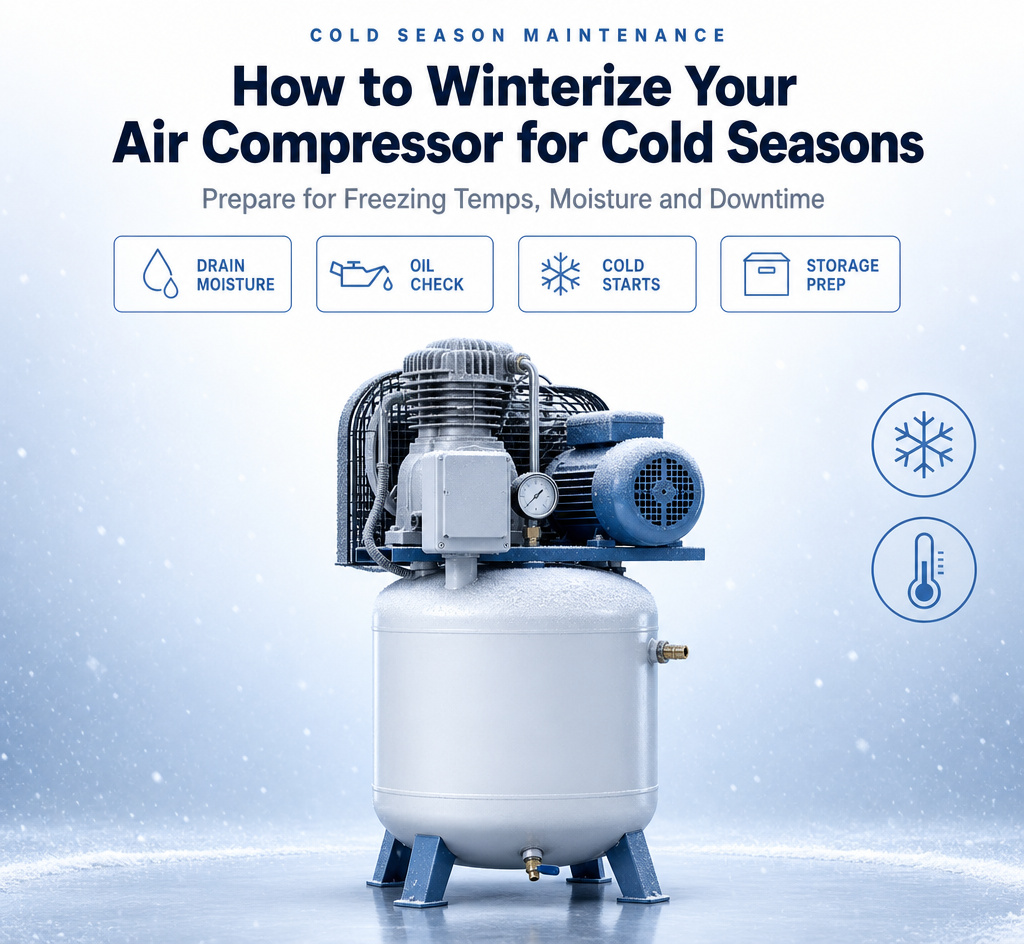
How to Winterize Your Air Compressor for Cold Seasons
Introduction
Air compressors operating in workshops, construction sites, and industrial facilities face severe performance risks during cold winter seasons. Low temperatures, frost, and freezing wind can damage internal components, block air pipelines, and cause sudden system shutdowns. Many unplanned compressor failures in winter stem from neglected cold-weather maintenance rather than mechanical wear.
Winterizing your air compressor is a cost-effective preventive maintenance routine that stabilizes equipment performance, avoids freeze damage, and extends the service life of your entire compressed air system. This professional guide covers complete winter preparation steps, daily operation tips, and key mistakes to avoid for both stationary and portable air compressors.
Why Air Compressor Winterization Is Critical
Compressed air naturally contains water vapor generated during air compression. In low-temperature environments, residual moisture condenses and accumulates inside air tanks, filter housings, pipelines, and dryers. Once temperatures drop below freezing, trapped water expands into ice, causing pipe cracking, tank deformation, blocked airflow, and damaged drain valves.
Additionally, cold weather increases lubricant viscosity. Thickened compressor oil leads to difficult startup, increased motor load, insufficient lubrication, and accelerated wear of rotors, bearings, and moving parts. Proper winterization eliminates these hidden risks, ensuring stable pressure output and reducing expensive emergency repairs during cold seasons.
Common Cold Weather Compressor Problems
Without professional winter preparation, air compressor systems frequently encounter the following cold-weather faults:
- Frozen condensate drain valves leading to water accumulation inside air tanks
- Over-thickened lubricant causing startup failure and motor overloading
- Ice blockages in inline filters and air pipelines resulting in pressure drop
- Rust and corrosion caused by trapped frozen moisture
- Degraded air dryer efficiency failing to remove water vapor effectively
- Cracked plastic and metal fittings due to ice expansion
Step-by-Step Winterization Process for Air Compressors
Drain All Condensate Completely
Complete condensate drainage is the most essential winterization step. Before cold weather arrives, fully shut down the compressor and release all system pressure. Manually drain the air receiver tank thoroughly to remove all accumulated water. For automatic drain valves, perform functional tests to ensure timely and complete drainage.
Do not ignore auxiliary equipment, including filter bowls, air dryers, and branch pipelines. Residual moisture in these small components is the primary cause of freezing blockages. For intermittently used compressors, drain all moisture after every shutdown throughout winter.
Switch to Low-Temperature Compressor Oil
Standard compressor oil thickens significantly in cold environments, reducing fluidity and lubrication performance. Before winter comes, replace existing oil with professional low-viscosity winter-grade compressor oil designed for low-temperature operation.
Check oil quality and oil level carefully. Replace any cloudy, emulsified, or contaminated oil to ensure smooth startup and full lubrication protection in freezing temperatures. Proper oil selection effectively reduces motor load and avoids premature component wear.
Inspect and Replace Filters and Dryers
Air intake filters, oil filters, inline pipeline filters, and air dryers are highly susceptible to cold weather failure. Clogged filter elements trap moisture and impurities, greatly increasing freezing risks. Inspect all filter elements thoroughly and replace worn or blocked cartridges before winter.
Test refrigerated air dryers and desiccant dryers to confirm stable dew point performance in low temperatures. Well-maintained filtration and drying systems reduce moisture content in compressed air and minimize freeze hazards across the entire air network.
Insulate Pipes and Exposed Components
Exposed metal pipelines, valves, and filter housings lose heat rapidly in cold wind and frost, accelerating condensation and freezing. Wrap all outdoor and unheated workshop pipelines with professional thermal insulation materials.
Focus insulation on vulnerable components such as drain valves, pressure gauges, and pipe joints. For extremely cold regions, install heating strips on key pipelines to maintain stable temperatures and prevent ice formation.
Test Drain Systems and Safety Valves
Cold temperatures often cause valve jamming and mechanical failure. Manually test all drain valves, safety relief valves, and pressure control valves to ensure flexible operation. Clean valve interiors to remove dust, oil sludge, and residual impurities that may cause freezing and jamming.
Functional safety valves prevent overpressure risks caused by blocked pipelines in winter, improving overall system safety and stability.
Cold Season Daily Operation Best Practices
During winter daily use, develop standardized operating habits to protect your compressor system. Preheat the compressor for 3 to 5 minutes after startup before applying full load, avoiding instant heavy operation in low temperatures. Check drain systems daily for ice blockage and drain residual moisture regularly.
Keep air intake vents clean and free of snow, frost, and dust blockages to ensure sufficient air intake. Monitor operating temperature and pressure in real time to detect abnormal changes early and avoid mechanical failure.
Long-Term Winter Storage Guidelines
If the air compressor will remain idle for long periods in winter, perform comprehensive winter storage maintenance. Fully drain all condensate from the entire system, replace deteriorated oil and filters, and clean the equipment surface thoroughly.
Place the compressor in a dry, insulated indoor environment. If outdoor storage is unavoidable, cover the unit with breathable waterproof covers to prevent snow accumulation and frost erosion. Never use fully sealed plastic covers, as trapped moisture will cause internal rust and component damage.
Common Winterization Mistakes to Avoid
- Only draining tank moisture while ignoring pipeline and filter condensate
- Using standard viscosity oil in low-temperature winter environments
- Skipping filter replacement and dryer testing before cold seasons
- Applying full load immediately after cold startup without preheating
- Using open flames to thaw frozen pipelines, causing safety hazards and component damage
- Sealing compressors with non-breathable covers during long-term storage
Conclusion
Winterizing your air compressor is an indispensable part of professional compressed air system maintenance. Complete condensate drainage, low-temperature oil replacement, filter and dryer inspection, pipeline insulation, and regular winter checks effectively avoid freeze damage, startup failures, and pressure instability.
Investing time in systematic winter preparation reduces downtime, cuts maintenance costs, and maximizes the service life of air compressors and supporting accessories. Standardized cold-season maintenance ensures continuous, stable, and efficient operation of your industrial compressed air system throughout winter.
Primary vs. Secondary Air Filters: What's the Difference?
Best Air Compressor Types for Small Workshops
Related Article