where to buy air compressors
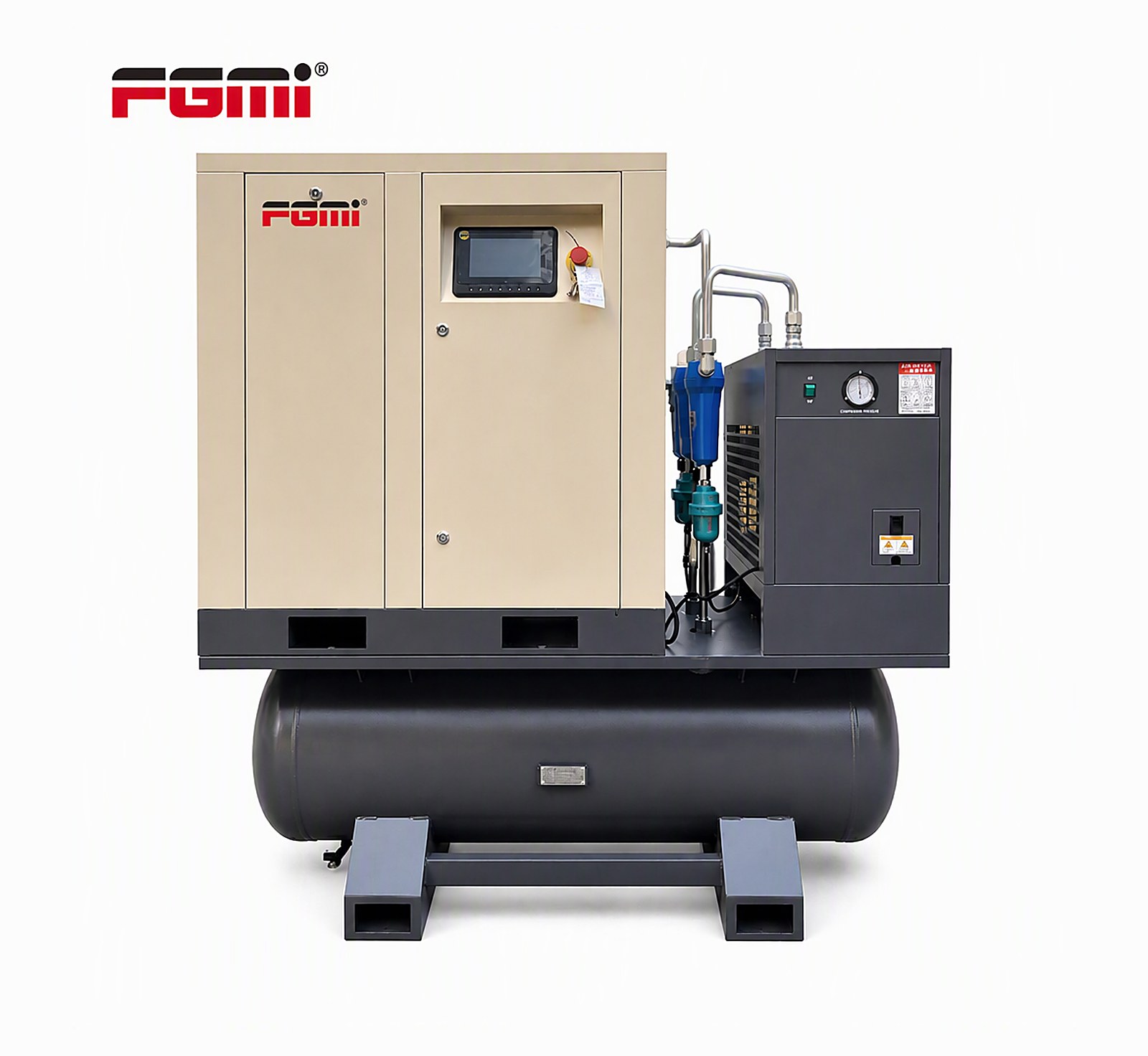
Air Screw Compressor Industrial 7.5kW / 10HP With Dryer and Tank: A Purchasing Engineer's Specification Guide
A 7.5kW (10HP) rotary screw air compressor is the most mis-specified size class in a workshop. It sits exactly on the line between "a piston machine would have been cheaper" and "two of these in parallel would run cooler than one oversized unit". Buy on the nameplate alone and you inherit three problems at commissioning: the tool you actually run draws more than the machine delivers at your pressure, the compressed air leaving a bare compressor carries water that your packaging or welding process will not tolerate, and a 130 kg skid arrives at a bay door it cannot fit through.
This guide is a specification walkthrough of one build — an oil-injected, air-cooled, portable screw compressor supplied as a set with an air dryer and receiver tank — followed by the free-air and dew-point arithmetic a purchasing engineer needs before signing a purchase order. No marketing claims, only the numbers a buyer is accountable for.
- What a "7.5kW / 10HP With Dryer and Tank" Set Actually Contains
- Compressor Types at This Power Class — and Where This One Sits
- Full Specification Table, With Data Source Stated Per Row
- Applications Where 10HP Screw Is the Right Machine
- Six-Step Selection Method: Capacity, Pressure, Air Quality, Power, Handling
- Frequently Asked Questions
- Summary and How to Order a Build-to-Order Unit
1. What a "7.5kW / 10HP With Dryer and Tank" Set Actually Contains
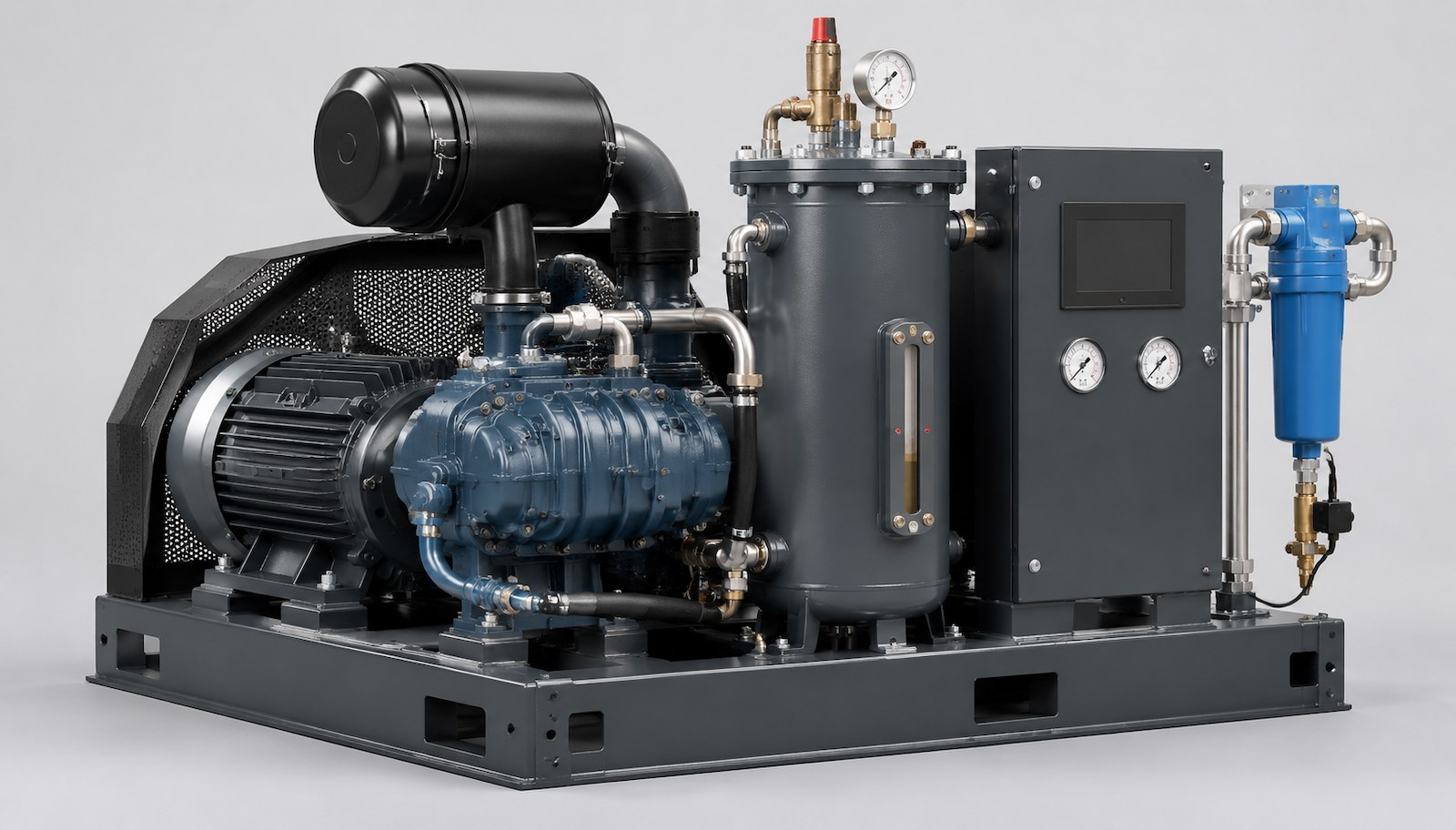
A rotary screw air compressor traps air between two meshing helical rotors inside a close-tolerance airend, reducing the volume continuously as the rotors turn. Unlike a reciprocating piston machine, delivery is continuous rather than pulsating, which is why screw compressors hold a stable header pressure without a large buffer and why they are rated for continuous duty instead of the 30–50% duty cycle of a piston unit.
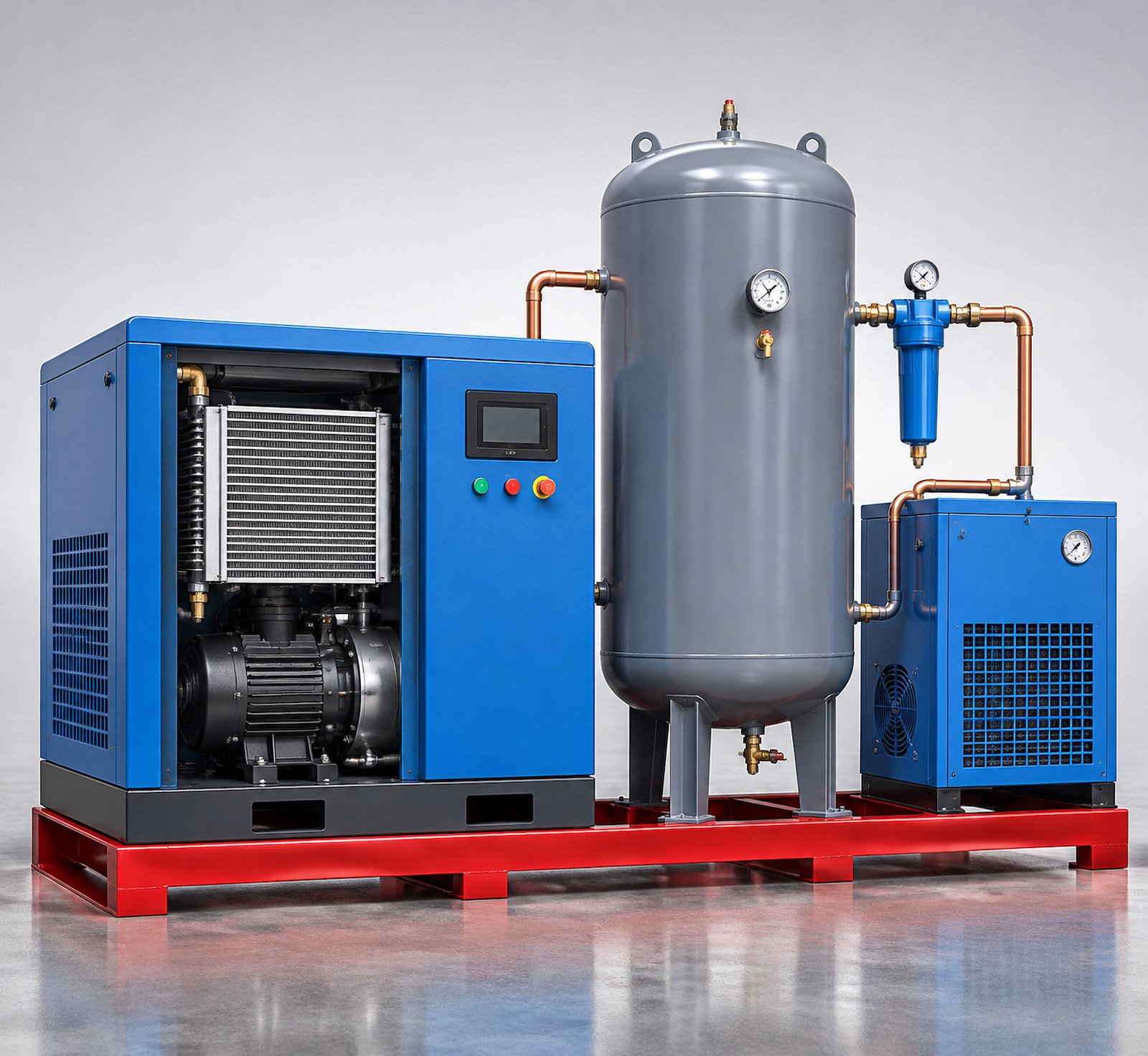
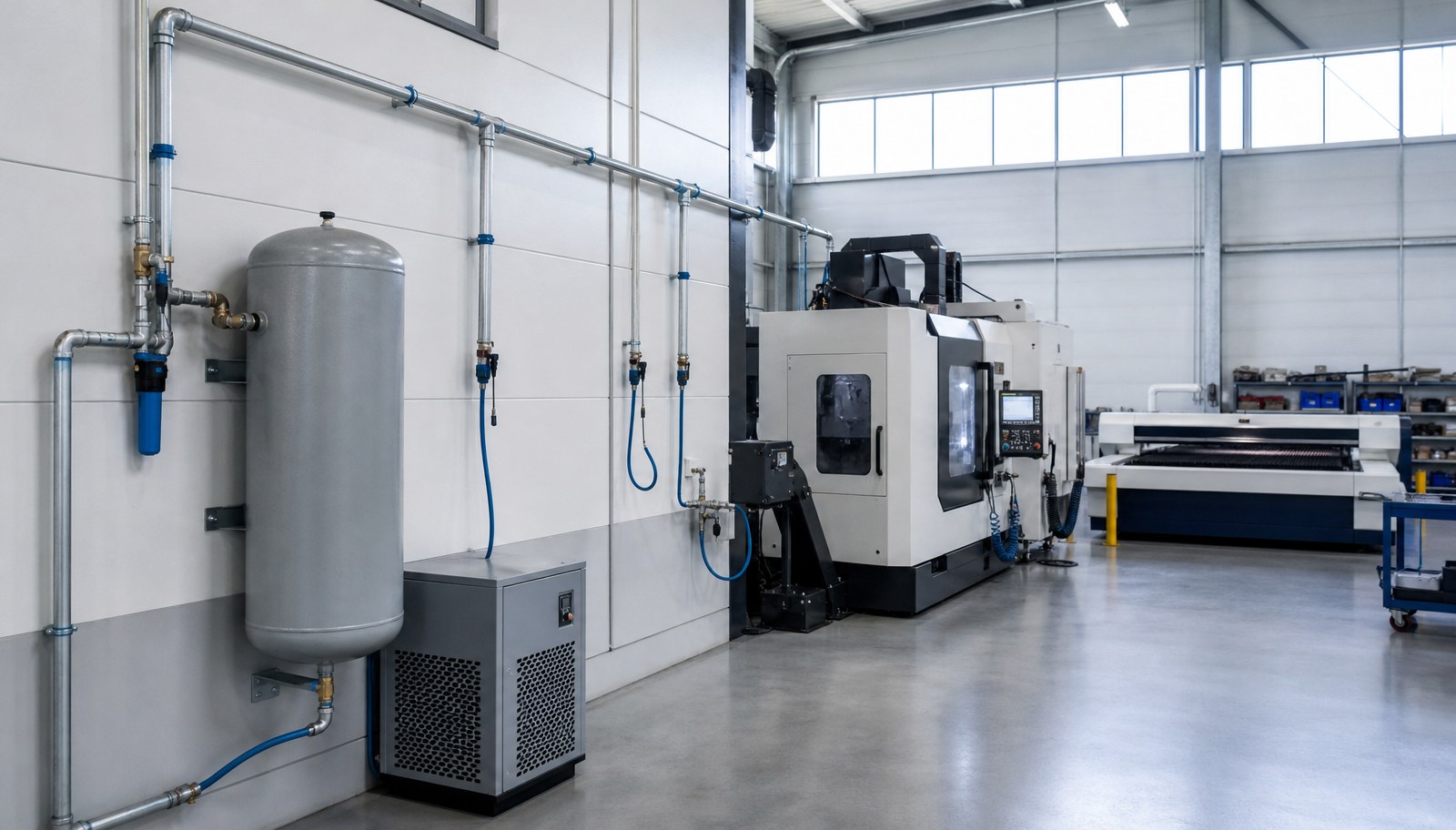
The phrase "with dryer and tank" is not a model number — it is a scope statement, and it is the first thing to pin down in writing. A genuine packaged set contains five separable items:
- airend + motor drive — the screw element, oil-injected for sealing, cooling and lubrication, driven by an AC motor at 7.5 kW (10 HP) shaft power;
- air receiver tank — stores compressed air, kills pulsation, absorbs short peaks above the machine's continuous delivery, and lets the compressor load/unload instead of stop-starting on every trigger pull;
- refrigerated air dryer — cools the compressed stream to condense its water vapour and drains it away, protecting tools, valves, hoses and the finished product from moisture;
- line filtration — at minimum a coalescing filter to remove oil aerosol and particulate downstream of the dryer;
- control and safety — a PLC controller as the core control component, plus pressure switch, safety valve and auto drain.
Buyer's check: ask every supplier to state, in writing, whether the dryer and tank are factory-integrated on one skid or loose items in a second carton. It changes your floor space, your piping labour, your freight class, and who is liable when the dryer warranty runs on a different clock from the compressor.
2. Compressor Types at This Power Class — and Where This One Sits
Four questions sort every 7.5 kW machine into a class. The machine specified in this article answers them as: oil-injected, air-cooled, portable, AC mains driven.
| Classification Axis | Options in Market | Trade-off an Engineer Must Accept |
|---|---|---|
| Lubrication | Oil-injected (this build) / water-injected / oil-free | Oil-injection seals the rotor clearances, so it is more efficient and far cheaper per kW. It requires coalescing filtration to remove oil aerosol; oil-free is only justified where a process cannot tolerate any hydrocarbon carry-over. |
| Cooling | Air-cooled (this build) / water-cooled | Air-cooled needs no cooling tower and no water treatment, which is why it dominates below 37 kW. It does require clearance around the cooler and inlet air below roughly 40 °C. |
| Mobility | Portable / stationary (this build is portable) | Portable means the receiver, dryer and compressor travel on one chassis. It can be moved between bays, but it is not a hand-carried unit at 130 kg. |
| Control | Fixed-speed load/unload (this build) / VSD inverter | Fixed-speed is lower in capital cost and simpler to service. VSD only pays back where demand swings hard and the machine idles often; below it, fixed-speed is the lower-risk buy. |
3. Full Specification Table, With Data Source Stated Per Row
Every value below is taken from the manufacturer's declared specification for this model. Rows where the supplier has not published a figure are marked Confirm with supplier rather than filled with a typical value — those are exactly the rows that cause commissioning failures.
| Parameter | Value | Data Source |
|---|---|---|
| Model class | Air Screw Compressor Industrial 7.5kW / 10HP With Dryer and Tank | Product listing |
| Type | Screw (rotary) stronger choice for continuous duty | Supplier declaration |
| Gas type | Air | Supplier declaration |
| Power source | AC mains | Supplier declaration |
| Rated motor power | 7.5 kW (10 HP) on this model; same platform spans 2.2–37 kW | Model designation + series range |
| Voltage | 380 V and 220 V both offered state your supply before ordering | Supplier declaration |
| Delivery pressure | 8 / 10 / 12 / 13 / 20 bar — selectable by airend | Supplier declaration |
| Lubrication style | Lubricated (oil-injected) | Supplier declaration |
| Cooling method | Air-cooled | Supplier declaration |
| Configuration | Portable | Supplier declaration |
| Core components | PLC | Supplier declaration |
| Noise enclosure | Mute (silent) enclosure: No | Supplier declaration |
| Weight | 130 kg | Supplier declaration |
| Warranty | 1 year from shipment | Supplier declaration |
| Pre-shipment inspection | Video outgoing inspection provided | Supplier declaration |
| Brand / origin | FGMI / Guangdong, China | Supplier declaration |
| Colour | Customised colour accepted | Supplier declaration |
| Intended use | Provide compressed air for general industry | Supplier declaration |
| Packing | Single item selling unit | Supplier declaration |
| Free air delivery (m³/min or CFM) | Confirm with supplier at your stated pressure — the single most important figure and it changes with the pressure option chosen | Not declared |
| Receiver tank volume | Confirm with supplier — litre rating and design code vary by destination market | Not declared |
| Dryer type and dew point | Confirm with supplier — refrigerated dryers typically deliver a pressure dew point of 2–10 °C; desiccant dryers reach −20 to −40 °C. Ask which is fitted. | Industry range + not declared |
| Sound level dB(A) | Confirm with supplier — this build is declared as non-mute, so measure at 1 m before siting it near a workstation | Industry range + not declared |
On the data source: "Supplier declaration" means the value is stated by the manufacturer for this model and should appear on the nameplate or in the packing documents. "Not declared" rows are deliberately left open; a credible supplier answers them within one email, and a supplier who cannot should not be shortlisted. Ask for the performance curve at your selected pressure — the free-air figure without a stated pressure and inlet temperature is meaningless for comparison.
4. Applications Where 10HP Screw Is the Right Machine
The 7.5 kW class earns its place when a plant needs steady air on every shift but its total demand stays inside one small airend. Below are the duty patterns where this specification is the correct engineering answer, and where it is not.
Well suited
- CNC and machining centres with through-spindle air blast, chip blow-off and tool-change actuation — demand is repetitive and continuous across the shift, which is exactly what a screw airend is built for, and the receiver absorbs the short valve pulses.
- Laser cutting of thin sheet with air assist — the cut quality depends on dry, oil-free-at-the-nozzle air, so the dryer and coalescing filter in this set are not optional extras; they are the reason the parts pass.
- Packaging and filling lines — pneumatic cylinders, diverters and label applicators switching all day. Moisture here causes jam and print defects, so a packaged dryer is the correct scope.
- Woodworking and spray booth blow-down — dust-making environments where the air-cooled cooler must be kept clean; see the cleaning interval in the overheating guide linked below.
- Small fabrication shops running two to four tools at once, plus a single diaphragm or pump-fed spray gun.
- Site and maintenance work that moves between bays — the portable configuration exists for this case, and the single-item packing unit simplifies handling.
Not the right machine
- Sporadic use under an hour per week — a piston compressor is a lower-capital answer when the screw unit will spend its life unloaded.
- Processes that cannot accept any oil carry-over (food contact, pharmaceutical, some plating) — this build is oil-injected; specify a certified oil-free machine or a validated multi-stage purification train with monitoring.
- High, cyclic demand above the airend's free-air delivery — the machine will run permanently loaded and trip on high discharge temperature. Add capacity or split the load instead.
5. Six-Step Selection Method: Capacity, Pressure, Air Quality, Power, Handling
Work the six steps in order. Reversing them — picking a machine first and checking the demand later — is how most undersized installations are born.
- Total the connected demand in free air, not in pipe size. Add the m³/min (or CFM) each tool consumes while it is firing, taken from the tool's own datasheet at its working pressure. Multiply the total by the diversity factor — the share of tools that genuinely run together. A shop with six tools that never all fire at once does not need six tools' worth of air.
- Add the leakage allowance, then size the machine. Mature installations leak 20–30% of generation. Multiply your demand total by 1.25, then compare against the compressor's free air delivery at the pressure you selected, never against its nameplate kW. Buying on kW alone is the most common specification error at this size class.
- Fix your working pressure and hold a margin. Take the highest requirement of any single tool and add the pressure drop between machine and nozzle — hose length, quick couplers, filters and a dryer each consume part of a bar. This platform is offered at 8, 10, 12, 13 and 20 bar, so specify the pressure option in the order rather than accepting the default.
- Define air quality by what touches the product. Wet air damages pneumatics and ruins finishes, so a dryer belongs in the scope for any coating, laser, food-contact-adjacent or electronics duty. Confirm the fitted dryer's pressure dew point in writing, and place the coalescing filter downstream of the dryer, not upstream.
- Verify the electrical supply before the machine ships. The unit is offered in both 380 V and 220 V. Confirm your phase count and voltage, and check the starter and cable sizing against the motor's locked-rotor current, not its running current — a breaker that trips on start is an installation defect, not a compressor fault.
- Plan the handling and the clearance. At 130 kg this is a two-person or trolley move, and a portable chassis still needs a forklift or pallet truck at the dock. Once installed, an air-cooled machine needs clear airflow around its cooler; blocking it against a wall is a direct route to high discharge temperature trips. The maintenance and cleaning intervals behind that failure mode are covered in how to prevent air compressor overheating.
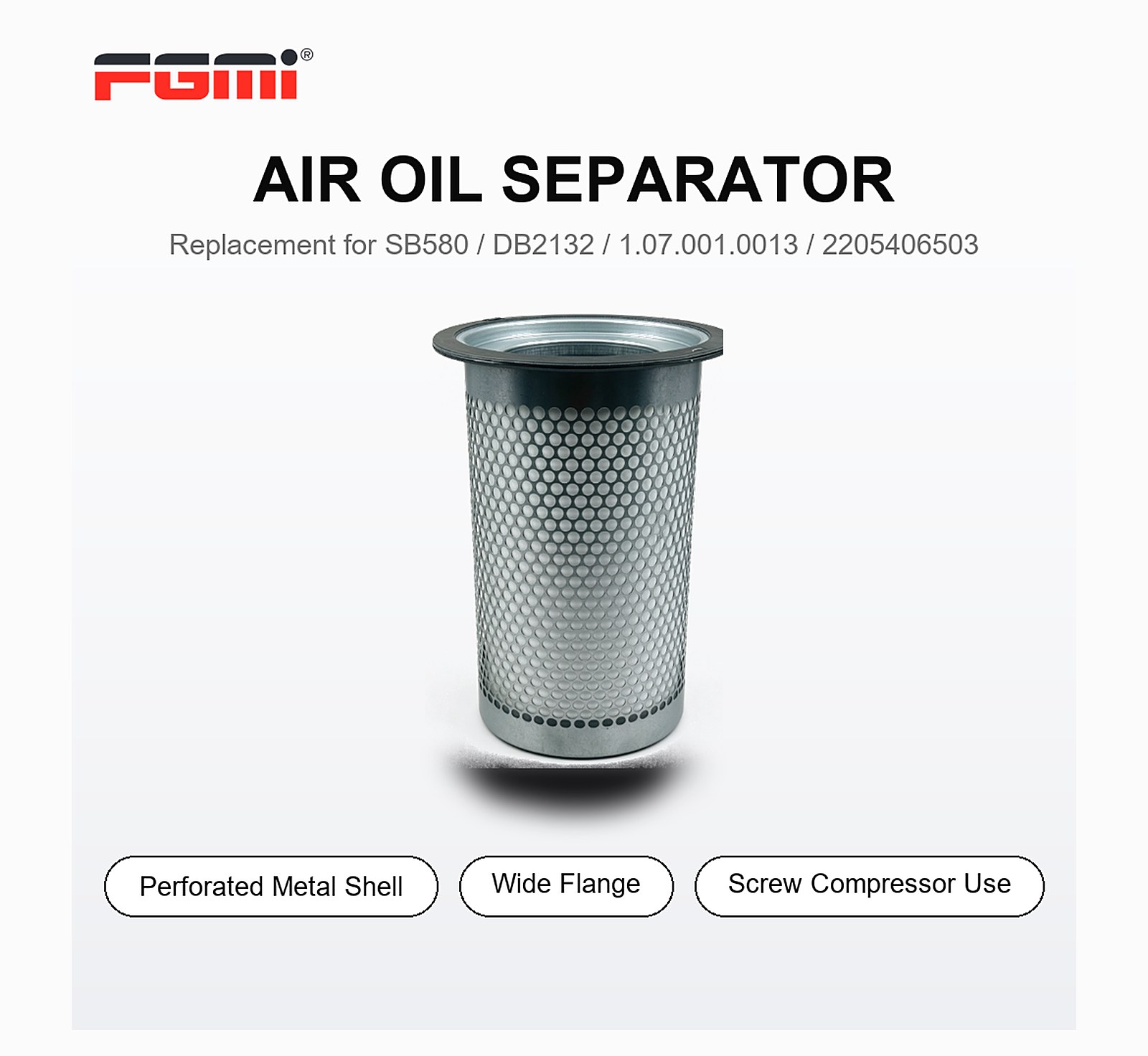
Filter selection is part of compressor selection. The intake and oil filters on this class of machine are consumables on a fixed interval, and a clogged intake filter shows up first as falling delivery and rising discharge temperature. Related reading: air filter lifespan — when to replace it, and the FGMI filter and compressor product list.
6. Frequently Asked Questions
Yes on the first point: 7.5 kW and 10 HP are two units for the same motor rating (1 HP ≈ 0.746 kW). No on the second — motor power tells you what the machine draws, not what it delivers. Two 7.5 kW airends can differ by a fifth in output depending on airend profile and the pressure it is set to. Always compare free air delivery in m³/min at a stated pressure.
Those are different airend and drive-ratio configurations built on the same 7.5 kW platform. Choosing a higher pressure option trades away delivery: more bar means fewer cubic metres per minute from the same shaft power. Choose too low a pressure and your last tool on the line loses force; choose unnecessarily high pressure and you pay electricity for air you cannot use, since each additional bar of discharge pressure raises energy consumption by roughly 6–7% for a fixed delivery.
Lubricated means oil-injected: the airend is sealed and cooled with oil, so you get better efficiency per kW and lower purchase price, but the supply contains oil aerosol that must be removed by a coalescing filter, and you own an oil-and-filter service interval. Mute: No means no acoustic enclosure is fitted, so the machine is louder than a silent-box unit and should not be sited beside a permanent workstation without a partition. Both are specification facts, not defects — but they must drive where you put the machine and what filtration you order with it.
Only if the dryer's rating matches the duty. A refrigerated dryer is the normal pairing at this capacity and typically holds a pressure dew point of 2–10 °C, which suits general tools, laser air-assist and most painting. It is not enough where lines run outdoors in winter and can drop below that dew point, or where a process demands −20 °C or lower — those need a desiccant dryer. Because the fitted dryer is not declared for this model, confirm the dryer type and its pressure dew point in writing before purchase, and size it to the compressor's full delivery at your ambient temperature.
Both voltages are offered for this platform, so the wrong choice is a configuration error, not a limitation. A 380 V unit landed on a 220 V supply will not start and may damage the PLC and contactor; a 220 V unit on a 380 V line is an immediate destruction event. State your voltage, phase count and frequency in the purchase order and require them on the nameplate you receive in the pre-shipment inspection video.
Usually not at 7.5 kW. The screw premium buys continuous duty, stable pressure and long service life; if the machine will idle most of the day, a piston compressor returns the capital faster. The screw machine becomes the correct buy when air is on demand for most of the shift, when several tools run at once, or when pressure stability matters to the process. The warranty stated for this model is 1 year from shipment, which assumes industrial duty, so run it accordingly.
7. Summary and How to Order a Build-to-Order Unit
A 7.5kW / 10HP oil-injected, air-cooled portable screw compressor delivered with a receiver tank and dryer is the correct machine for a shop with continuous, moderate air demand that needs dry, stable air without a plant-room installation. The declared specification covers 8 to 20 bar, 380 V or 220 V, PLC control, 130 kg and a 1-year warranty. Before the purchase order leaves your desk, close the four open items: free air delivery at your chosen pressure, receiver tank volume, dryer type with its pressure dew point, and sound level.
Because the platform is built to order — pressure option, voltage, colour and the dryer/filtration scope are all selectable — the shortest route to a correct quotation is to send your demand list rather than ask for a price. Send the tools you run, how many simultaneously, your working pressure and your mains supply, and you will receive a sized set instead of a catalogue line.
Send your tool list, simultaneous demand, working pressure and mains voltage. We build the 7.5kW package around them: pressure option, receiver volume, dryer and filtration scope, colour. Free engineering review of your air demand, and video inspection of your unit before it ships.
- Energy-Saving Tips for Air Compressor Users — where the electricity in a compressed-air system actually goes.
- How to Prevent Air Compressor Overheating — cooler fouling, oil level and ventilation, in order of likelihood.
- Air Filter Lifespan: When to Replace It — differential-pressure criteria for intake and oil filtration.
how much is an air compressor
where to buy air filters
Related Article