Air Filter Lifespan: When to Replace It
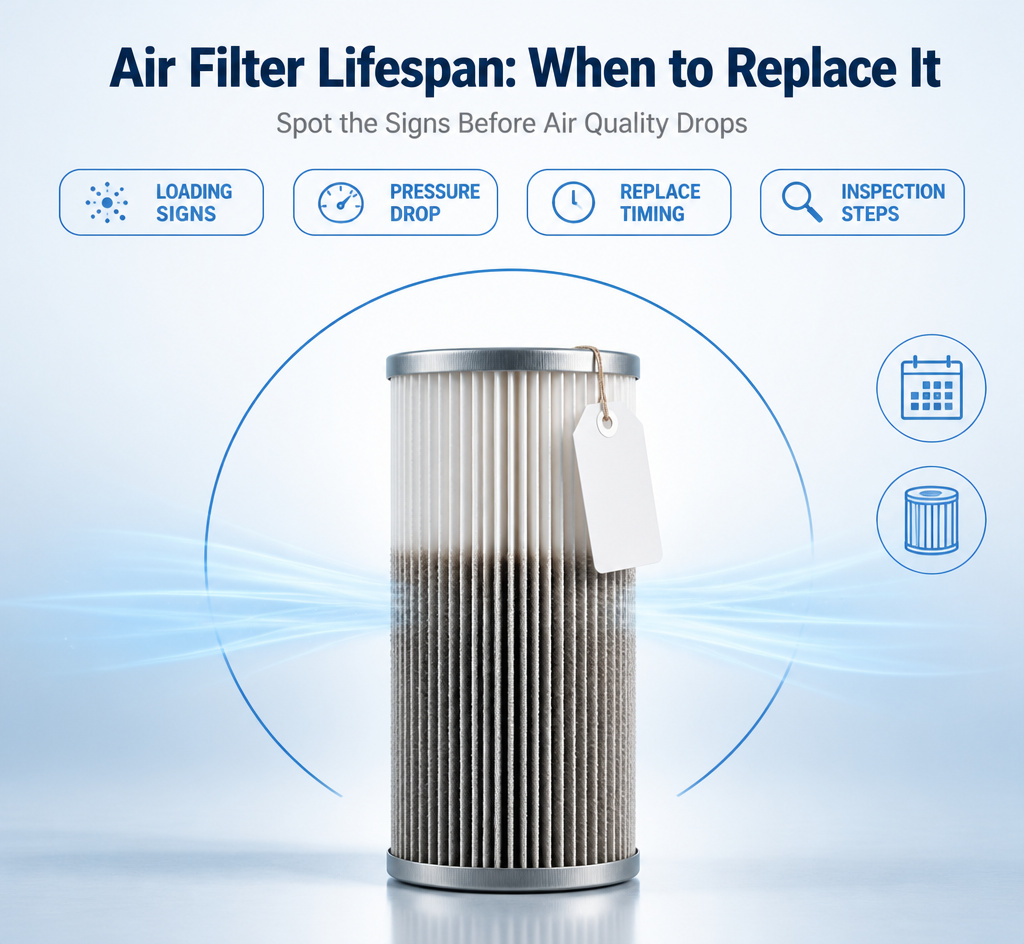
Air Filter Lifespan: When to Replace It — Typical Hours, Warning Signs and the Differential-Pressure Rule
Air filters are critical consumables in every compressed air system. Many facility managers rely on calendar-based replacement schedules, but filter lifespan is not fixed. Dust load, humidity, ambient air quality and operating hours all change how quickly a filter clogs or degrades.
Waiting too long increases pressure drop, reduces system efficiency, and allows contaminants to pass through and damage downstream equipment. Replacing too early wastes budget and inventory. This guide explains typical lifespans for common industrial air filters, clear replacement indicators, and how to build a practical maintenance schedule for your workshop or plant.
TYPICAL LIFESPAN AT A GLANCE
| Primary intake filter | 6–12 months (clean indoor) / 1–3 months (dusty sites) | Secondary safety filter | often 12–24 months |
| Coalescing / particulate line filter | 8,000 operating hours or 12 months, whichever first | Sterile membrane filter | 6–12 months, depending on pre-filters |
| HEPA filter (cleanroom) | 1–3 years with proper pre-filtration | Replacement rule | Differential pressure threshold — not the calendar |
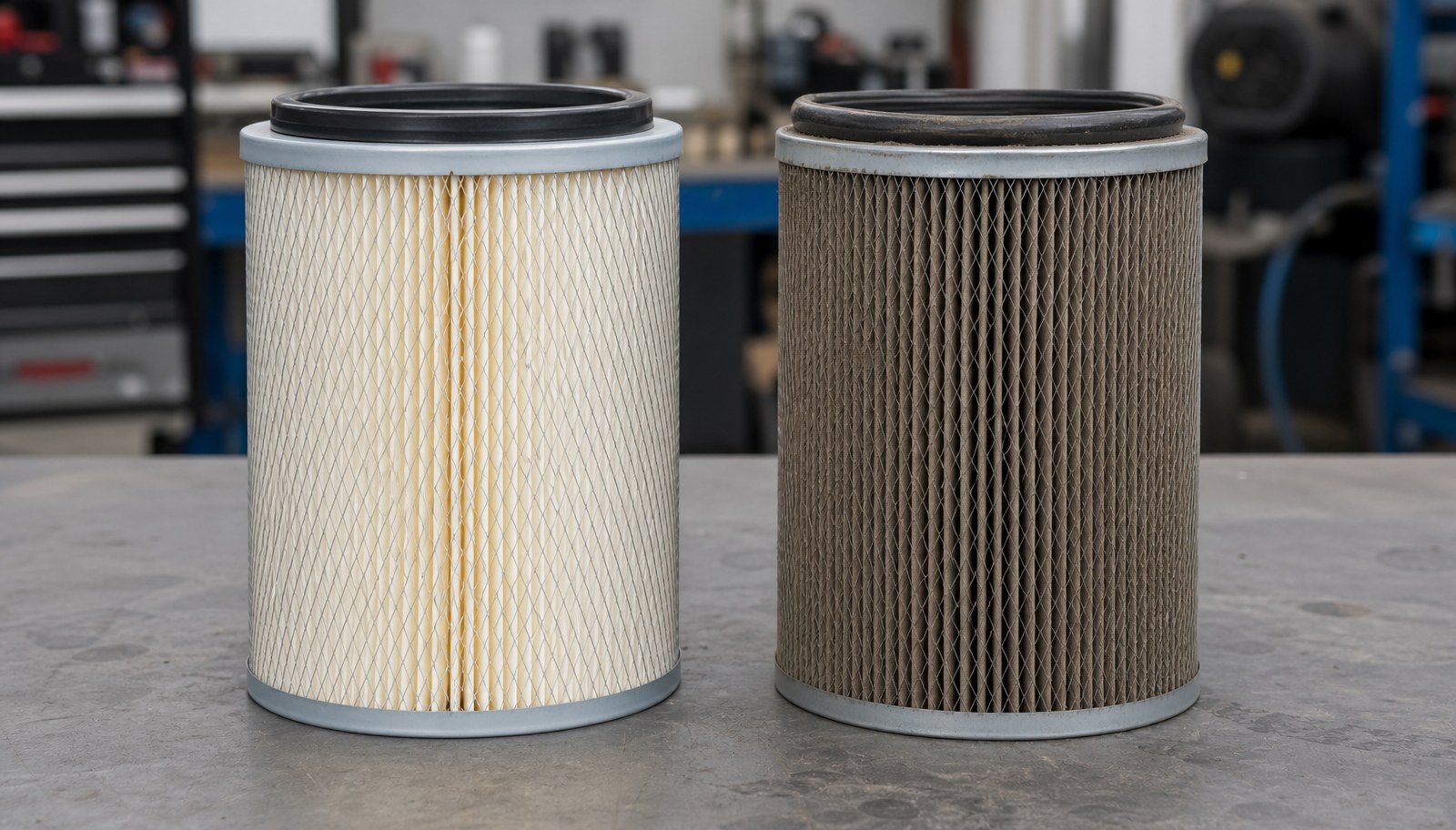
Table of Contents
- Typical Lifespan for Different Air Filter Types
- Key Factors That Shorten Air Filter Service Life
- Warning Signs That an Air Filter Needs Replacement
- Why Differential Pressure Is the Best Replacement Trigger
- Risks of Running an Air Filter Past Its Service Life
- Pro Tips to Extend Air Filter Lifespan
- Conclusion
- Related Products & Further Reading
- Frequently Asked Questions (FAQ) About Air Filter Lifespan
1. Typical Lifespan for Different Air Filter Types
1.1 Compressor Intake Air Filters
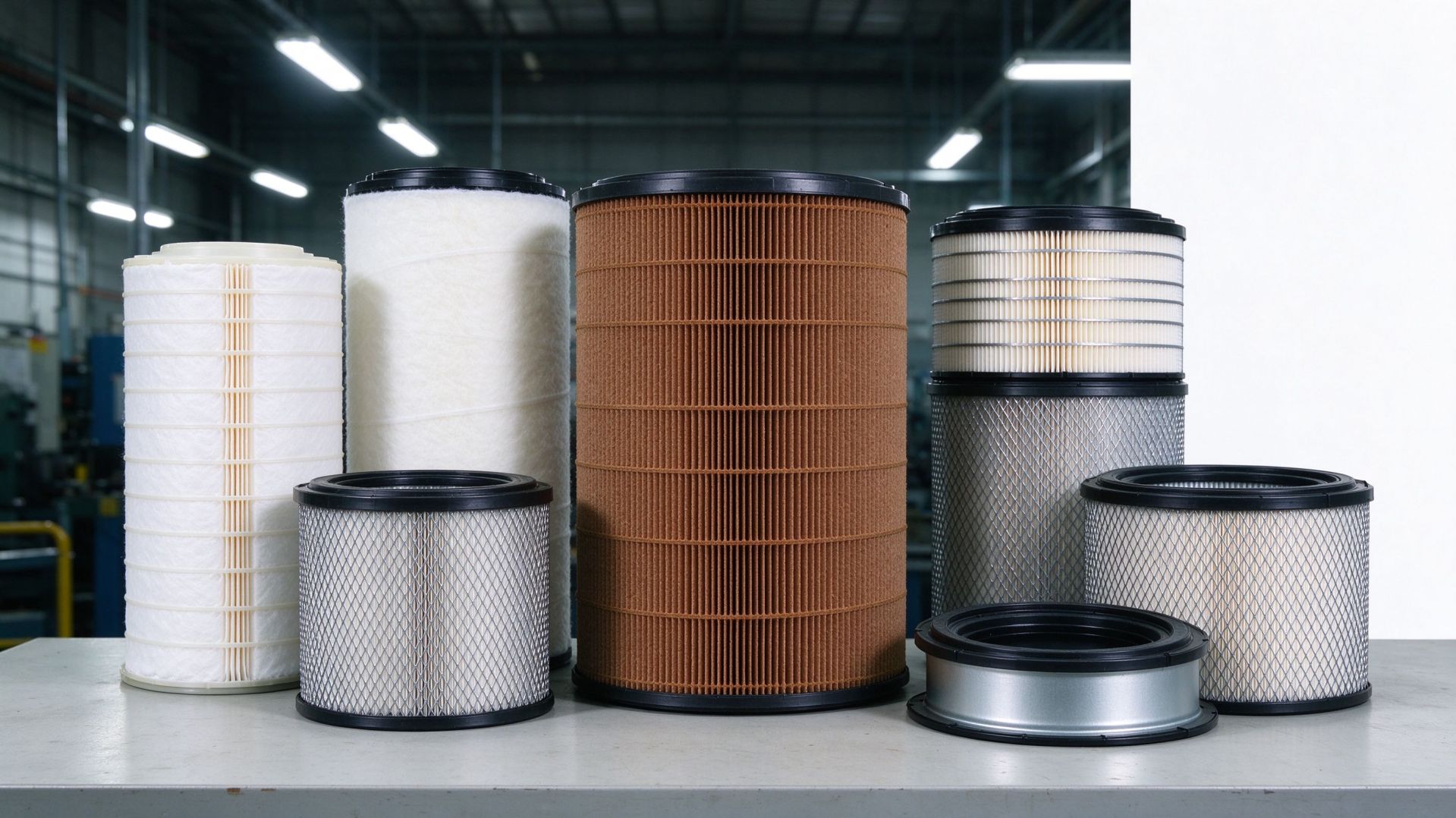
Primary intake air filters are the first stage of protection for air compressors. In clean indoor workshops, primary intake filters can last 6 to 12 months. In dusty environments such as construction sites, woodworking shops or mining areas, lifespan may drop to just 1 to 3 months. Secondary safety intake filters have a much longer service life, often 12 to 24 months, as they only capture fine particles that bypass the primary filter. If the primary filter tears or fails, the secondary filter will clog rapidly and require immediate replacement.
1.2 Coalescing and Particulate Line Filters
In-line coalescing filters and particulate filters installed after the air receiver tank normally have a rated lifespan of 8,000 operating hours or 12 months, whichever comes first. These filters capture liquid water, oil aerosols and fine solid particles. Heavy condensate, oil carryover or chemical vapors will accelerate media saturation. Even if runtime is low, the filter element should still be replaced annually because media and seals degrade over time. Replacement line filters are listed under line filter elements.
1.3 Sterile and HEPA Filters
Sterile membrane filters for food and pharmaceutical compressed air usually last 6 to 12 months, depending on pre-filter performance. HEPA filters used in cleanrooms can last 1 to 3 years with proper pre-filtration. These high-grade filters cannot be judged visually — replacement decisions rely on differential pressure readings and periodic integrity testing. Damaged seals or media rupture require immediate element replacement regardless of age.
2. Key Factors That Shorten Air Filter Service Life
- High dust concentration in intake air
- High humidity and excess condensate entering the filter housing
- Oil aerosols contaminating filter media and blocking pores
- Frequent system cycling and pressure fluctuations
- High operating temperature that weakens filter media and rubber gaskets
- Missing or damaged pre-filters that force the fine filter to capture coarse debris
- Chemical vapors or corrosive airborne materials attacking filter media
3. Warning Signs That an Air Filter Needs Replacement
Differential pressure rise is the most reliable indicator, but visual and operational symptoms also signal replacement is needed:
- Higher pressure drop across the filter housing
- Reduced airflow to pneumatic tools
- Longer compressor loading cycles
- Higher energy consumption
- Filter media appears dark, caked with dust, wet or oily
- Oil, water or particles detected downstream of the filter — the element may be saturated or damaged
A broken gasket or torn filter media means the filter is no longer working and must be replaced right away.
4. Why Differential Pressure Is the Best Replacement Trigger
Calendar-based schedules are only a rough estimate. The true condition of an air filter is measured by differential pressure between the inlet and outlet sides. Every filter has a manufacturer-specified pressure drop threshold. Once the pressure difference reaches this value, the filter is clogged.
Continuing operation wastes energy because the compressor must work harder to push air through the blocked media. Install differential pressure gauges or transmitters for each filter stage to monitor performance and trigger replacement automatically. This method prevents premature replacement and also avoids running filters past their usable life.
5. Risks of Running an Air Filter Past Its Service Life
- Higher energy consumption as the compressor overcomes increased pressure drop
- Filter media rupture, allowing all trapped contaminants to flow downstream
- Oil and dust buildup contaminating air tools, finished products and downstream filters
- Premature wear on compressor rotors, bearings and seals from unfiltered intake air
- Microbial growth inside wet filter housings, especially in food and pharma systems
- Increased downtime and expensive repairs for pneumatic equipment
6. Pro Tips to Extend Air Filter Lifespan
- Use multi-stage filtration to protect high-value fine filters — pre-filters capture large debris and reduce loading on downstream elements.
- Inspect filters regularly according to site conditions, especially during dusty seasons or production peaks.
- Maintain condensate drains to prevent liquid water from entering filter housings.
- Check sealing gaskets during every inspection to avoid air bypass.
- Keep maintenance logs that record differential pressure readings, operating hours and replacement dates.
A well-managed multi-stage filtration system can extend the life of expensive fine filter elements significantly and reduce total filtration cost. See also: 6 signs your compressor filter needs replacing.
Conclusion
Air filter lifespan varies widely based on filter type, working environment and upstream pre-treatment. Fixed calendar schedules are a starting point, but differential pressure measurement is the most reliable metric to decide when to replace an air filter.
Clogged filters waste energy and create contamination risks, while unnecessary filter changes increase operational costs. By monitoring pressure drop, inspecting filter condition and maintaining proper pre-filtration, you can replace air filters at the optimal time, protect your compressed air system, and keep maintenance spending under control.
Related Products & Further Reading
Matching filter elements for this guide
- Air Filter C1360 — intake element for mid-range screw compressors
- Air-Oil Separator SB564 / DB2186 (50HP) — coalescing element with a defined pressure-drop limit
- Line Filter Element 015 — inline protection downstream of the dryer
Continue reading
Frequently Asked Questions (FAQ) About Air Filter Lifespan
Q1: How long does a screw compressor intake air filter last?
A1: In clean indoor workshops, primary intake filters can last 6 to 12 months. In dusty environments such as construction sites, woodworking shops or mining areas, lifespan may drop to just 1 to 3 months. Secondary safety intake filters often last 12 to 24 months.
Q2: How often should coalescing and particulate line filters be replaced?
A2: In-line coalescing and particulate filters after the air receiver tank normally have a rated lifespan of 8,000 operating hours or 12 months, whichever comes first. Even if runtime is low, the element should still be replaced annually because media and seals degrade over time.
Q3: What is the most reliable sign that an air filter needs replacement?
A3: Differential pressure rise is the most reliable indicator. Once the pressure difference between inlet and outlet reaches the manufacturer-specified threshold, the filter is clogged. Reduced airflow, longer loading cycles and higher energy consumption are supporting symptoms.
Q4: Can high-grade filters be judged visually?
A4: No. Sterile membrane filters and HEPA filters cannot be judged visually. Replacement decisions rely on differential pressure readings and periodic integrity testing. Damaged seals or media rupture require immediate element replacement regardless of age.
Q5: How can air filter lifespan be extended?
A5: Use multi-stage filtration so pre-filters capture large debris and protect fine elements. Maintain condensate drains to keep liquid water out of housings, inspect gaskets to avoid bypass, and keep logs of differential pressure, operating hours and replacement dates.
Order matched replacement elements by OEM number. Contact FGMI with your compressor model, filter housing or part number for factory-direct quotation.
FGMI · FACTORY DIRECT SUPPLY
Get a Matched Filter Element Quotation
Send your compressor model, power rating or OEM part number. We confirm fitment, differential pressure and a replacement schedule for your machine — usually within one working day.
|
WhatsApp / WeChat: +86 180 2755 8737 Email: effy_yan@huamacompressor.com Address: Guangdong Feige Filter Co., Ltd. 4th Floor, No. 6, Industrial Fourth Road, Hengjiangxia, Changping Town, Dongguan City, Guangdong Province of China |
COMMERCIAL TERMS Sample lead time: about 7 days Mass production: about 45 days after deposit MOQ: 1 carton per model, export packing Warranty: 1 year from shipment |
How to Prevent Air Compressor Overheating
Compressor Oil Filters: Why They Matter
Related Article