which way does air filter go
Which Way Does Air Filter Go? Flow Direction, End Faces and Seating Explained
Take a new element out of the box and both ends look usable. One is open, one is closed, the mesh wraps the whole cylinder, and nothing in the shape explains the difference. That is exactly why which way does air filter go keeps being asked, and why the answer is not a picture of the filter but one sentence about where the air is travelling.
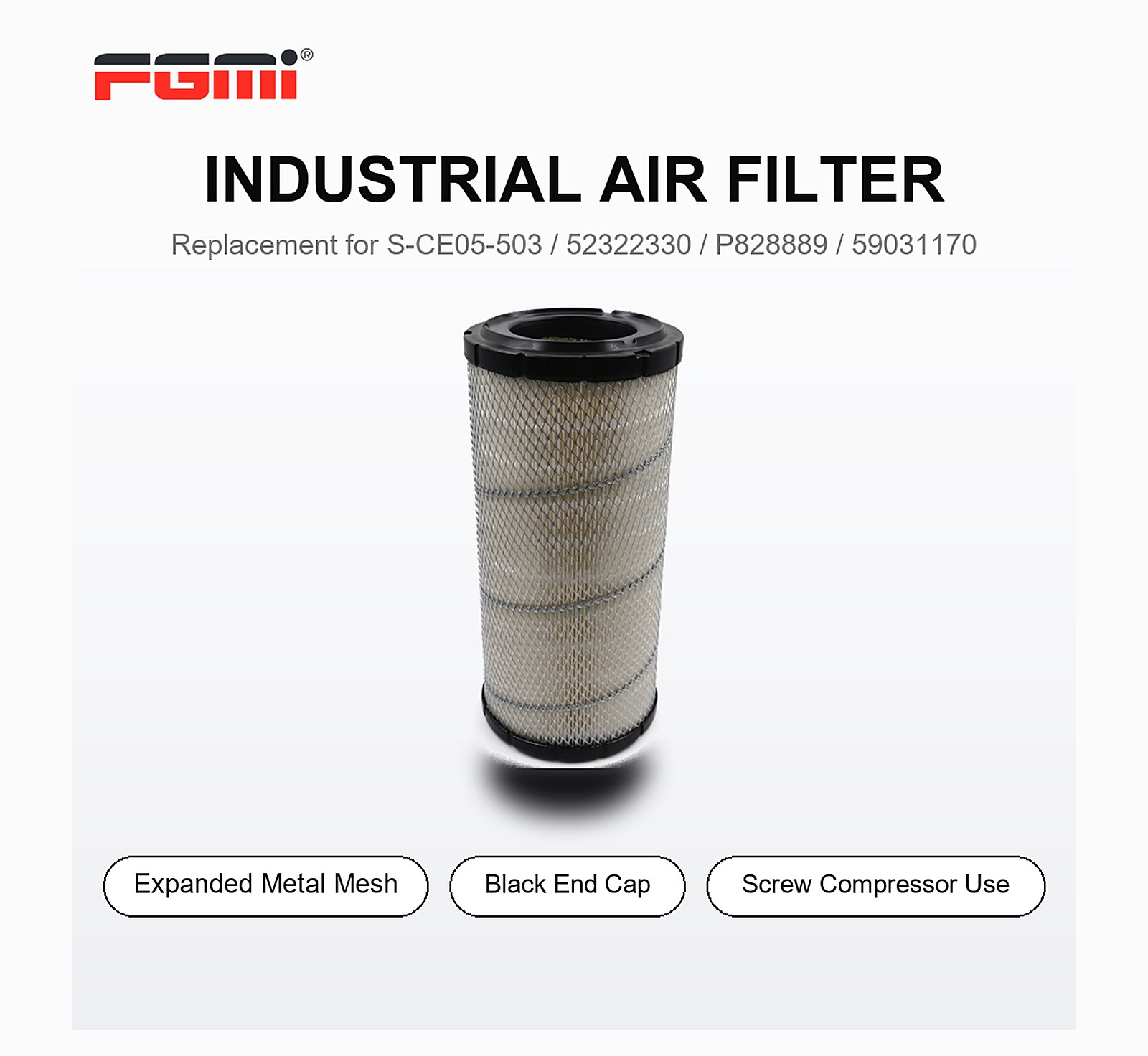
For every dry element air filter fitted to a screw compressor, including the FGMI Air Filter Element S-CE05-503 52322330 P828889 OD165xH345mm Air Intake Filter for Screw Air Compressor Spare Parts, air moves from the outside of the pleated pack into the open core, and the core hands it to the machine inlet. Settle that sentence and the orientation settles itself. Get it wrong and the element can still look perfectly seated while it is filtering almost nothing.
- The One Rule That Answers Every Case
- Which End Is Which on a Compressor Intake Element
- How to Confirm Orientation Before You Close the Cover
- The Specification Lines to Check, With Their Source
- What Fitting It the Wrong Way Actually Costs
- Frequently Asked Questions
- Summary and How to Order the Right Element
The One Rule That Answers Every Case
A dry air filter is not a bidirectional device, and the reason is structural rather than subtle. The pleated pack is a thin medium held apart by spacer beads and supported by a mesh, and it is built to be loaded from one side only. On the clean side sits an open core with nothing behind it to push against. On the dirty side sits the workshop air and every gram of dust carried in it.
- Air travels from the outside of the element to the inside. The mesh wall visible all round the cylinder is the dirty side. The core you can look straight through is the clean side, and it is that core which connects to the compressor inlet.
- The capped or ribbed face is a sealing face, not an entry. It presses against the housing wall or a gasket so that air cannot creep past the media unfiltered. Point that face at the open inlet and the air takes the shortest route, straight around the filter.
- A direction arrow, where one exists, points along the airflow. On a compressor it points away from the intake atmosphere and towards the airend. The convention holds everywhere else too: on a cabin filter or a furnace filter the arrow points downstream, towards the blower.
The working test is to ask what the machine breathes through rather than which side of the element looks like the front. On a screw compressor the answer is the open core, because the core is the port. Orientation is decided by the housing, and the air filter element merely obeys it.
Which End Is Which on a Compressor Intake Element
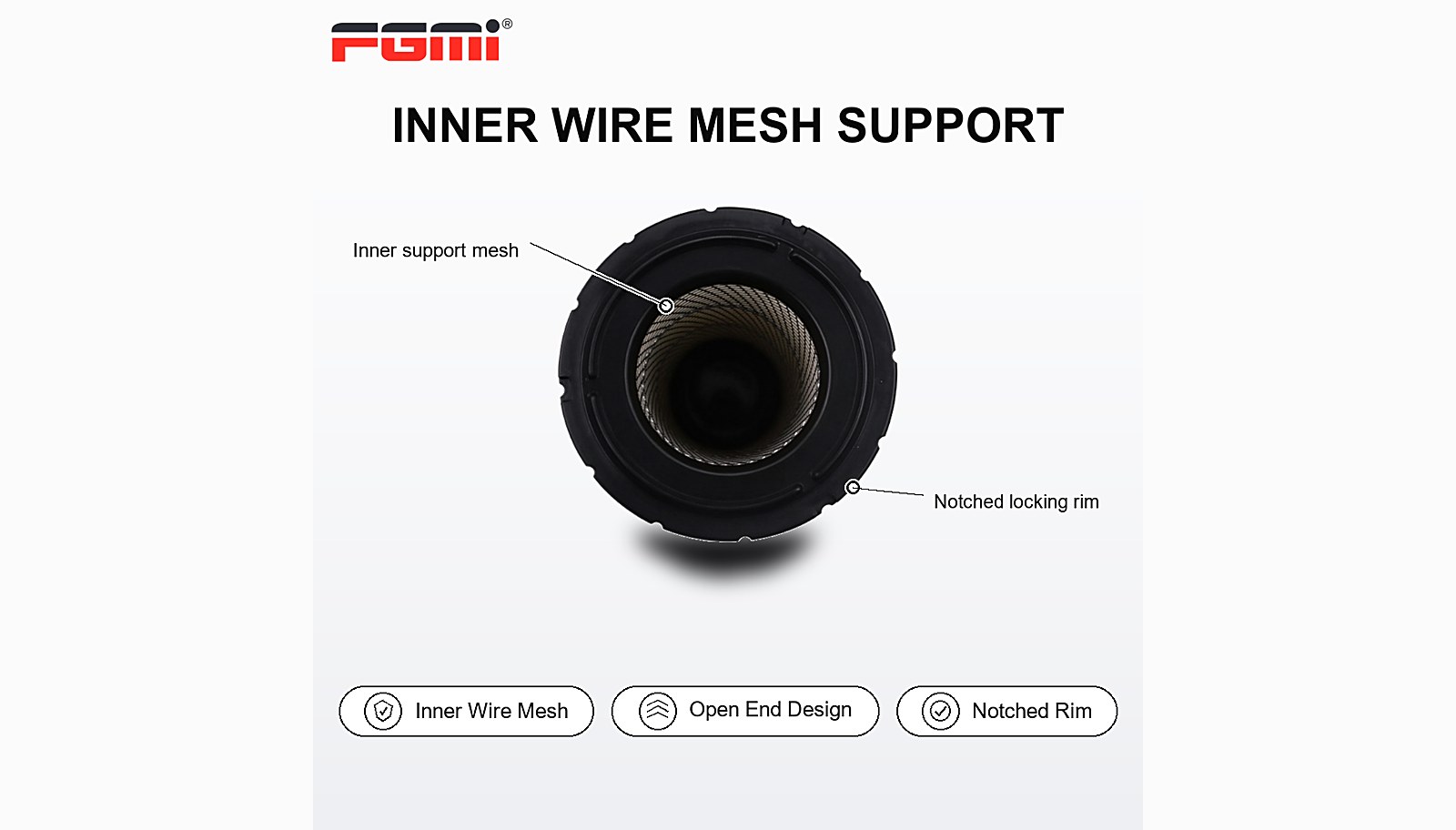
The element used here makes the two faces easy to name, because they look different once you know what you are looking at. Both ends are moulded black caps, but only one of them has an aperture in the middle.
- The apertured face is the clean-side outlet. Looking through the hole you can see straight down the core and along the inner support mesh. That core is the passage the filtered air travels back out through, and it is the face that mates with the machine inlet.
- The notched locking rim belongs to that same face. The evenly spaced notches around the circumference are there to locate and seal the element in its housing. They press against the housing face; they are not an air entry, and if they end up sitting in the open airflow the element is in backwards.
- The solid face is the blank end. It closes off the core and sits against the housing end plate or the clean air cover so that everything entering the machine has crossed the media first.
In most screw compressor intake housings the element slides over a clean air cover, and that cover only fits one way. Where the housing lets the element go in either direction, the manual decides, not the shape. That is the case worth photographing and keeping, because it is also the case where a night shift fit-out quietly reverses an element and the plant spends months breathing through a gap.
How to Confirm Orientation Before You Close the Cover
Four checks take under a minute and they catch the mistake while the cover is still off.
- Trace the air path with your hand, not your eyes. Air arrives through the mesh wall, crosses the pleats, drops into the core and leaves through the aperture. If the aperture is not pointing at the inlet port, the element is the wrong way round.
- Seat the rim and look for the gap. Run a finger round the locking rim where it meets the housing. A visible daylight gap, or a gasket that is pinched on one side and loose on the other, is a bypass that no filter media can compensate for.
- Let the rim carry the element, not the media. The pack should hang free of the housing wall. If the mesh is being squeezed flat against the wall by the cap, the element is either seated crooked or is the wrong length for that housing.
- Read the indicator after the first run. A new element that shows high intake vacuum straight away is not a heavy duty filter, it is a blocked duct, a covered intake screen or an element that sealed against the wrong face.
The Specification Lines to Check, With Their Source
Orientation settles itself once the housing is known, but the element still has to be the right element. These are the lines worth demanding in writing, and the right hand column states where every value on this page came from. Anything reading Not published is genuinely absent from the listing used as the worked example and has deliberately not been filled in with a typical figure.
| Specification line | Value | Source of this line |
|---|---|---|
| Product name | Air Filter | Listing attributes |
| Model | S-CE05-503 | Listing attributes |
| Cross reference numbers | S-CE05-503, 52322330, P828889 from the listing title, with 59031170 printed on the product photograph | Listing title, plus product photograph |
| Type | Air Filter Element | Listing attributes |
| Suitable for | Air Compressor | Listing attributes |
| Outer diameter | 165 mm | Listing attributes, stated as OD 165 mm x H 345 mm |
| Overall height | 345 mm | Listing attributes, same line |
| Weight | 1.37 kg | Listing attributes |
| Packed size and weight | 20 x 20 x 42 cm, 1.37 kg | Listing shipping block |
| Support mesh | Expanded metal mesh outer wrap, with an inner wire mesh core | Listing attributes, plus product photographs |
| Pleated medium type and grade | Not published | Not declared on the listing |
| Filtration efficiency or micrometre rating | Not published | Not declared on the listing |
| Initial pressure drop | Not published | Not declared on the listing |
| Dust holding capacity | Not published | Not declared on the listing |
| Direction arrow moulded on the element | None visible in the published photographs | Product photographs |
| Colour | Brown | Listing attributes |
| Recommended service life | 3,000 to 4,000 hours under normal conditions, and the listing states actual life depends heavily on the operating environment | Listing FAQ |
| Certificate named in attributes | ISO9001, with three certificate records attached to the listing whose titles were not returned in the data pulled | Listing attributes and certificate block |
| Test documentation | Video outgoing inspection provided, machinery test report provided | Listing attributes |
| Minimum order | 1 unit | Listing trade block |
| Lead time | 15 days for a quantity of 9 in the shipping block; the FAQ states in stock items ship within 1 to 3 days | Listing shipping block and FAQ |
| Customisation | Logo customisation available from a minimum of 1 piece | Listing FAQ |
| After-sales | Online support | Listing attributes |
| Country of origin | China | Listing attributes |
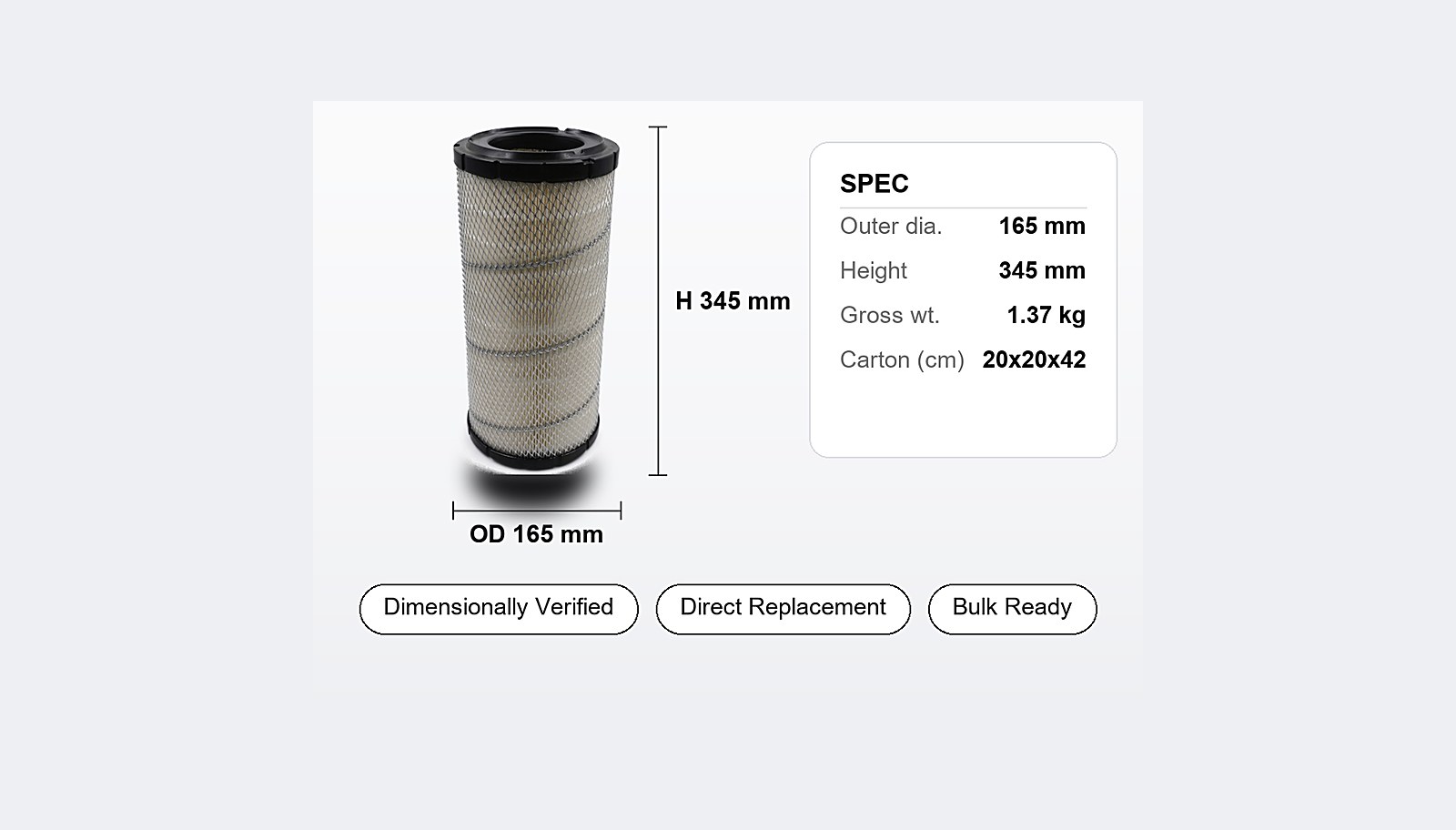
The narrow conclusion: the mechanical fit can be verified from air filter dimensions in ten seconds, but efficiency, initial pressure drop and dust holding are the lines that decide whether the element protects the machine, and on this listing those three are not published. Ask for them against a named model before you commit to a quantity.
What Fitting It the Wrong Way Actually Costs
A reversed element rarely falls out and rarely whistles, which is exactly why the mistake survives an inspection. What it does instead is quieter and more expensive.
- Unfiltered air reaches the machine. The only thing separating workshop air from the airend is the seal between the moulded cap and the housing face. Reverse the element and that joint is no longer where the designer put it, so dust arrives by the shortest available route instead of through the media.
- The intake vacuum reading stops meaning anything. Watching a vacuum or differential gauge is how a plant catches a loaded element early. With a leaking seat the gauge can look healthy while the machine breathes around the filter, and the first honest signal becomes dust in the oil.
- Everything downstream shortens. In an oil injected screw machine the intake filter is the first of three protections. Dust that gets past it is met next by the oil, then by the air oil separator, then by the discharge valve. The element fitted backwards is the cheapest part of that chain.
- The element may not release dust properly. Pleat geometry, resin stiffening and the outer mesh are designed around loading from one face. Drive air the other way and the way dust builds and sheds changes, which is the very behaviour the service interval assumes.
Frequently Asked Questions
Summary and How to Order the Right Element
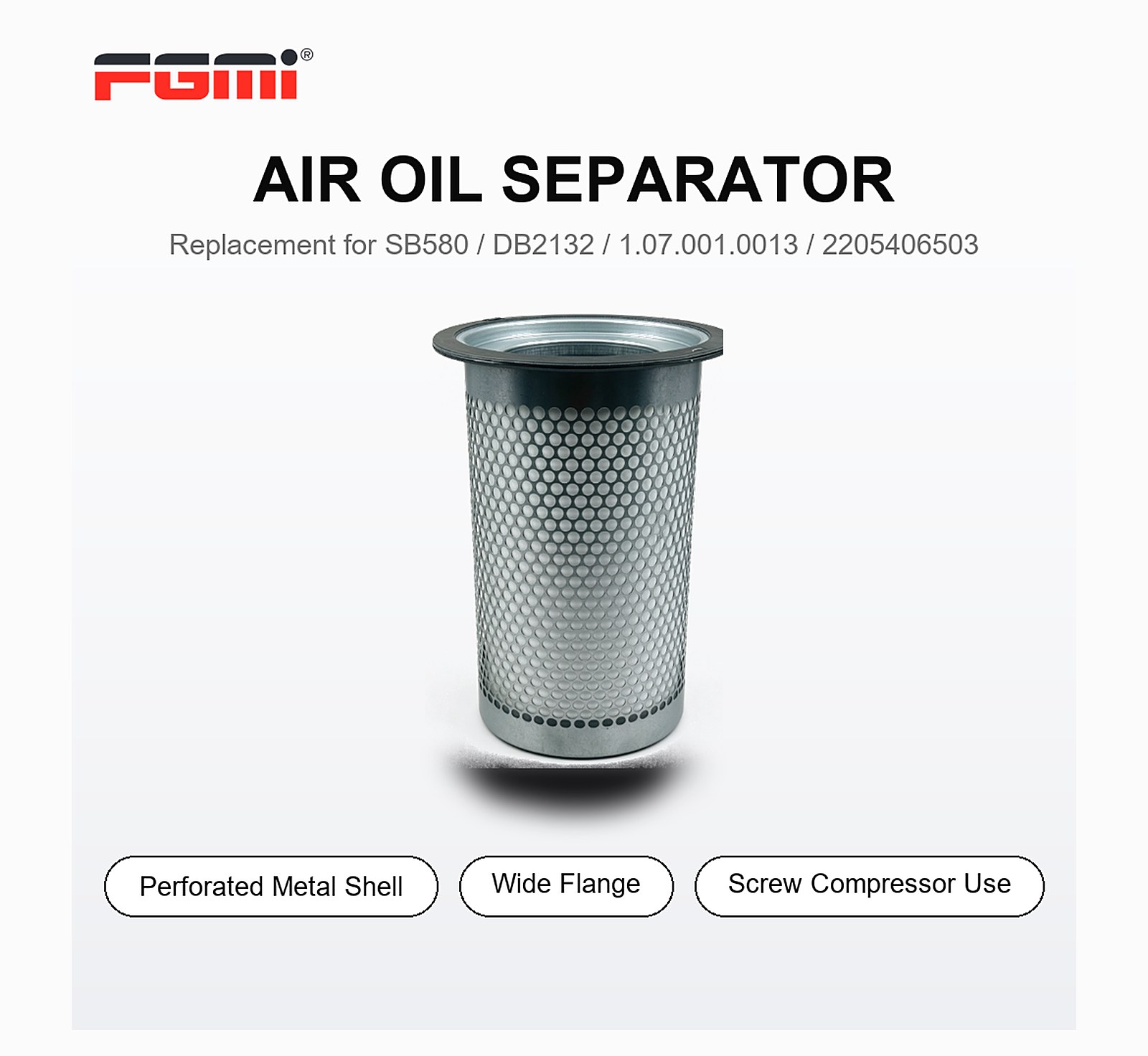
Answer the question which way does air filter go once and it stays answered: air crosses the media from the outside in, leaves through the open core, and the moulded rim is what seals it to the housing. Everything else on a fit-out is a dimension check or a paperwork check.
Before an order goes in, have four lines answered in writing against a named model. Outer diameter and height, so it physically seats. Efficiency and micrometre rating, so it protects the airend. Initial pressure drop, so it does not cost you airflow on day one. Dust holding capacity, so the service interval on the listing means something in your environment rather than in a test rig.
Send the outer diameter, the overall height, the aperture diameter and a photograph of the housing with the old element out. We will confirm the fit, then answer efficiency, initial pressure drop and dust holding against a named model before anything is quoted.
what type of oil does an air compressor take
what size air compressor do i need
Related Article