where to buy industrial air compressors
Where to Buy Industrial Air Compressors: The 22 kW PM Variable-Speed Screw Specification Guide
Most industrial air compressor purchases are lost long before installation. They are lost in the moment a buyer compares machines by power rating, because kilowatts are printed in the same place on every datasheet and free-air delivery is not. That single shortcut is what produces the two expensive outcomes: a machine that runs flat out and never builds pressure on a hot afternoon, or a machine 40 percent larger than the plant will ever need, converting electricity into heat at full load because it reaches its cut-out in ninety seconds.
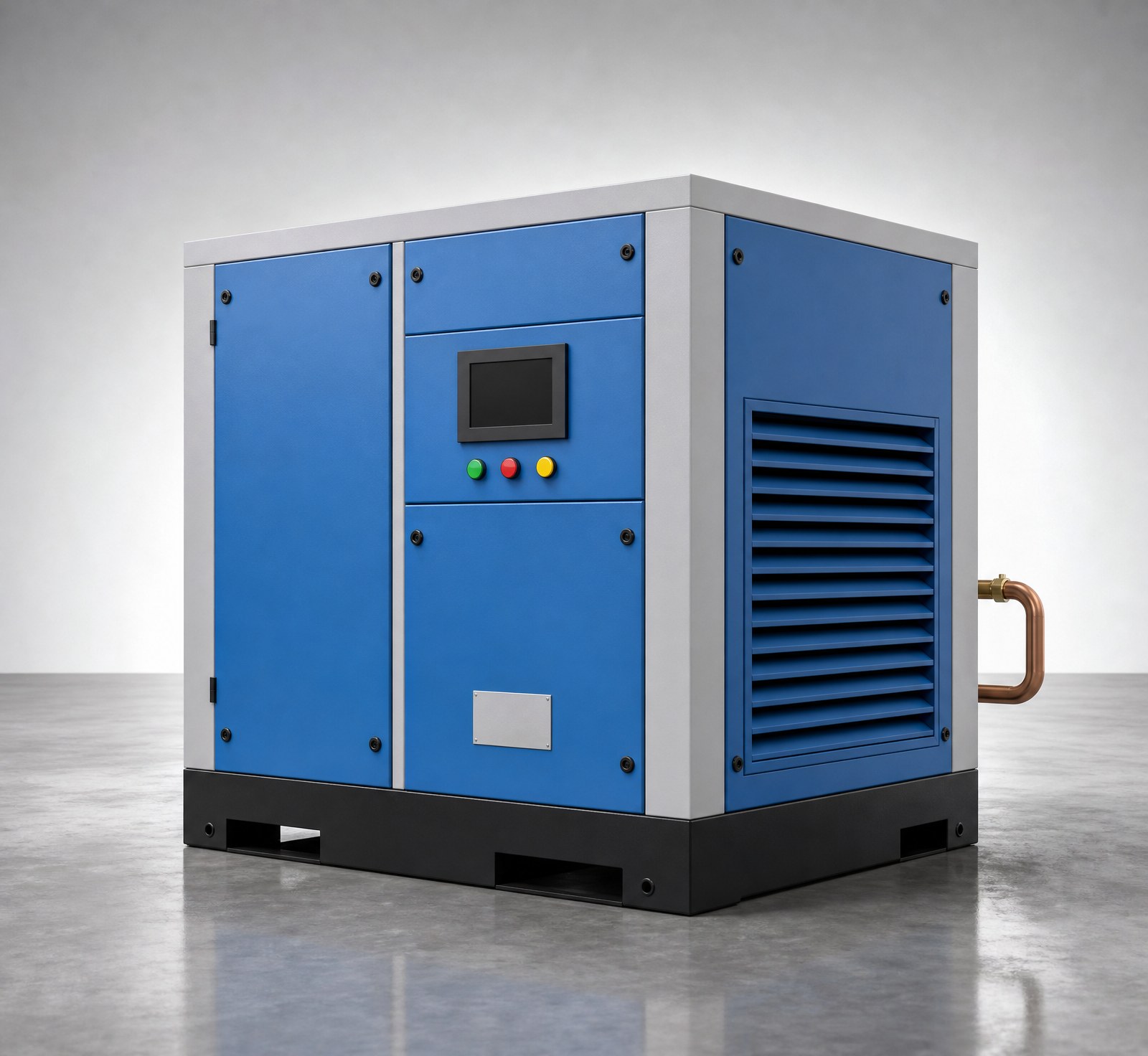
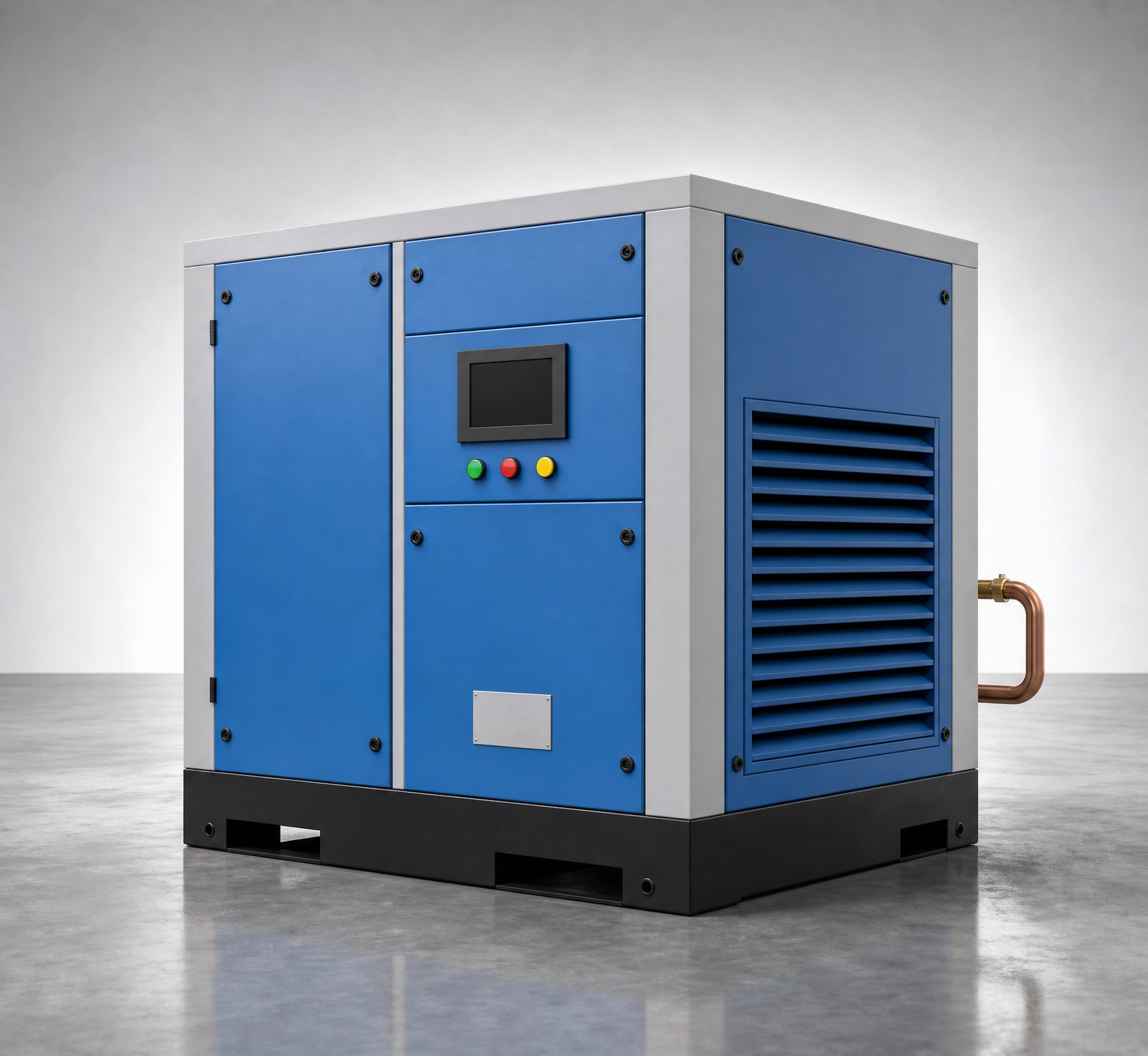
This guide is written around one specific machine — a 22 kW permanent-magnet variable-speed (PM VSD) oil-injected, air-cooled rotary screw compressor, model ZAY-30, 380 V, 8 to 16 bar, 1.96 to 3.8 m³/min — because a specification walkthrough is only useful when the numbers are real. Alongside it you get the six checks that decide whether where you buy matters more than what you pay: turndown range, flow at your pressure, treatment scope, supply and protection, rigging, and what the supplier can actually put in writing.
- What a 22 kW PM Variable-Speed Screw Compressor Is
- Machine Classes: Fixed Speed, VSD, Oil-Injected, Oil-Free
- Full Specification Table, With Data Source Stated Per Row
- Applications Where a 22 kW VSD Screw Unit Earns Its Premium
- Six Checks Before You Buy, in Order
- Frequently Asked Questions
- Summary, Total Cost of Ownership, and How to Order
1. What a 22 kW PM Variable-Speed Screw Compressor Is
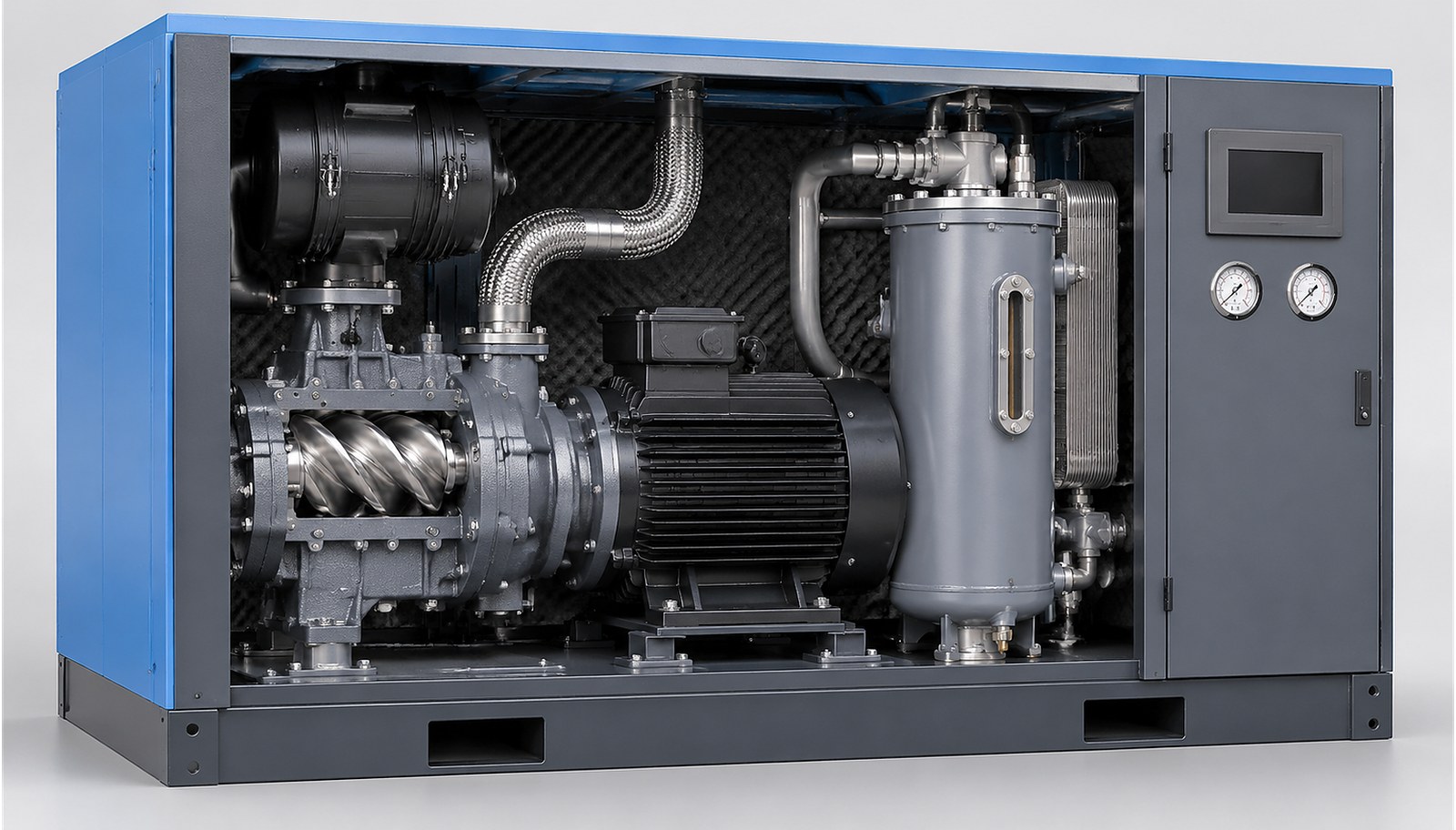
A rotary screw air compressor compresses air continuously between two meshing helical rotors inside a close-tolerance airend. Unlike a piston machine it delivers without pulsation, so it is rated for continuous duty and holds a stable header pressure. An oil-injected machine — this one is declared "Lubricated" — seals, cools and lubricates that airend with oil, which is why it is efficient per kilowatt and why the delivery needs coalescing filtration before it touches a product.
"PM variable speed" means the motor is a permanent-magnet machine driven through an inverter, so the airend's speed follows air demand instead of running at one fixed speed and unloading against a closed valve. A fixed-speed 22 kW machine still draws roughly 30 to 45 percent of full-load power while unloaded and producing nothing; a VSD machine reduces motor speed and consumes close to proportionally less. That is the entire economic argument for paying more up front.
2. Machine Classes: Fixed Speed, VSD, Oil-Injected, Oil-Free
| Class | Buy it when | What you accept in return |
|---|---|---|
| PM VSD, oil-injected, stationary (this machine) | Demand swings through the shift — most real factories. Turndown is where the money is. | Higher capital cost and an inverter to keep cool and clean; needs coalescing filtration for oil aerosol. |
| Fixed-speed, load/unload | Demand is steady and high, near the machine's rating most of the day. | Cheap and simple, but pays for air it does not make whenever it unloads. |
| Oil-free screw or scroll | Any process where hydrocarbon carry-over is a defect: food contact, pharma, some electronics and plating. | Much higher price per kW and shorter element life. Oil-free is still not dry-free — the dryer is separate money. |
| Portable / towable screw | Site work, hiring fleets, plant that moves. | This machine is declared configuration: Stationary. It is built to sit still and be piped in. |
| Reciprocating piston | Intermittent duty of a few hours a day and a small budget. | Duty-cycle limited, noisier, pulsating delivery. Not a plant-air machine. |
This machine also declares mute: Yes with a stated noise figure of 60±5 dB(A), and a direct-driven layout. Those two lines matter more than they look: a silent canopy is what allows a compressor to sit beside a work area instead of in a dedicated plant room, and direct drive removes belt tension, belt replacement and the slip losses that a belt-driven unit quietly adds to your meter.
3. Full Specification Table, With Data Source Stated Per Row
Every published value is below. Three rows are marked Do not use for planning because the published data contradicts itself or is missing where a purchasing decision needs it. Those rows are the ones that surface as freight surcharges, tripped breakers and pressure complaints after delivery.
| Parameter | Value | Data Source |
|---|---|---|
| Model | ZAY-30 — FGMI PM Variable Speed Screw Air Compressor | Supplier declaration |
| Type | Screw (rotary), twin-rotor airend | Supplier declaration |
| Rated power | 22 kW = about 30 HP; not a fractional-horsepower machine | Supplier declaration; conversion is arithmetic |
| Speed control | PM (permanent-magnet) variable speed drive, direct driven | Supplier declaration |
| Gas / application | Air, general industrial compressed-air duty | Supplier declaration |
| Air capacity (free air delivery) | 1.96 to 3.8 m³/min (69.22 to 134.20 ft³/min) the pair of figures is a pressure pair — buy against the one at YOUR pressure | Supplier declaration |
| Delivery pressure | 8 to 16 bar (about 116 to 232 psi), set at order | Supplier declaration; psi figures are arithmetic conversion |
| Lubrication style | Lubricated (oil-injected) — needs coalescing filtration for product-contact air | Supplier declaration |
| Cooling method | Air cooled — needs airflow clearance and intake air below roughly 46 °C | Supplier declaration + standard screw practice |
| Configuration / drive | Stationary enclosure, direct driven (no belt) | Supplier declaration |
| Sound level | 60±5 dB(A), mute (silent canopy): Yes. The measurement standard and distance are not declared — ask whether it is ISO 1217 sound power or a dB(A) sound-pressure figure at 1 m | Supplier declaration; scope not declared |
| Voltage / supply | 380 V, 50 Hz | Supplier declaration (50 Hz from the model name) |
| Full-load current, starter, fusing | Do not use for planning — not declared. Without the motor's full-load current and the inverter's line current you cannot size cable, breaker or the supply itself. Request it in writing before the machine is built | Not declared |
| Core components | PLC, Motor, Pressure Vessel, Bearing, Other | Supplier declaration |
| Machine dimensions (L×W×H) | 1150 × 800 × 1100 mm (45.28 × 31.50 × 43.31 in) | Supplier declaration; inch values match the metric values |
| Net weight | 360 kg | Supplier declaration |
| Packing list (size / gross weight) | Do not use for planning — self-contradictory. Published as 120 × 70 × 105 cm at 320 kg gross, but the machine alone is 115 × 80 × 110 cm at 360 kg net: a crate cannot be narrower or shorter than its contents, and gross weight cannot be below net weight. Get the real crate dimensions and gross weight before you quote freight or book a forklift | Two declarations that conflict |
| Warranty | 1 year — the same 1 year from shipment used across FGMI product pages | Supplier declaration |
| Inspection before shipment | Machinery test report provided; video outgoing inspection provided | Supplier declaration |
| OEM | OEM services provided (badging and colour to order) | Supplier declaration |
| Certification reference | The model name states CE. No certificate number, issuing body, directive or scope is published — request the certificate PDF and confirm the legal holder before you rely on it for import clearance | Declared in name; evidence not published |
| Brand / origin | FGMI / Guangdong, China | Supplier declaration |
| Packing unit | Single item | Supplier declaration |
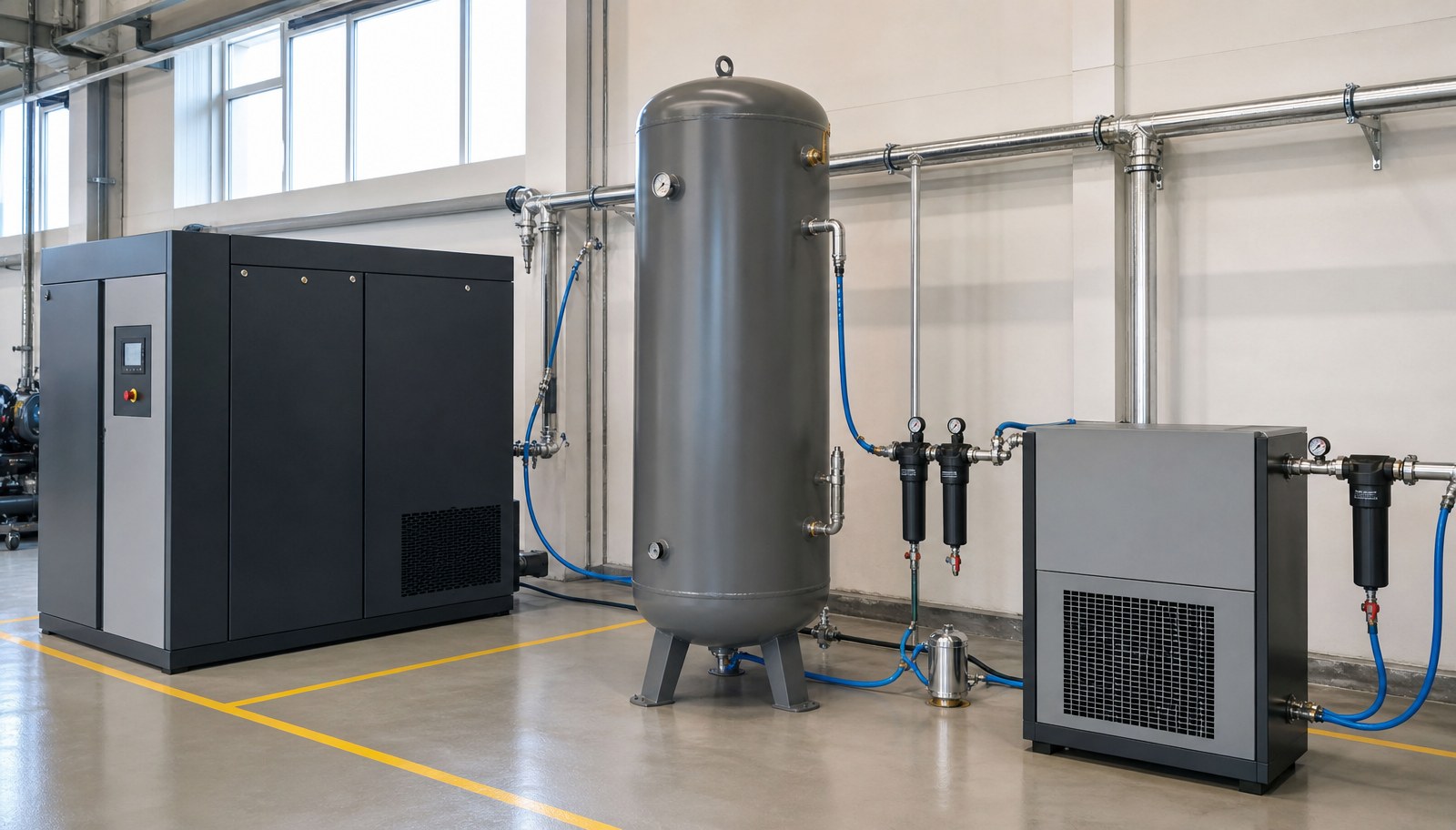
| Dryer, tank and filtration scope | Not declared. The listing covers the compressor. Treat receiver, dryer and filters as separate line items with their own ratings, sized to full delivery at your ambient temperature | Not declared |
Reading the source column: "Supplier declaration" means the manufacturer publishes it for this model and it should appear on the nameplate or in the packing documents. "Not declared" rows are left blank on purpose rather than filled with an industry typical, because those are exactly the rows that turn into change orders. A supplier who answers them in one email is a supplier you can specify from.
4. Applications Where a 22 kW VSD Screw Unit Earns Its Premium
At 1.96 to 3.8 m³/min this machine sits in the workhorse band for a small to mid-size factory. The premium over a fixed-speed unit is only recovered where demand actually varies, so read the duty patterns first and the industry names second.
| Duty pattern | Is VSD the right answer | What to specify alongside it |
|---|---|---|
| CNC machine shops — chip blow-off, through-spindle air, tool changers, fixtures cycling in bursts | Strong fit. Load swings minute to minute with the programme, which is exactly the VSD case. | Receiver tank sized for burst peaks, refrigerated dryer, coalescing filter at the machine group. |
| Fibre laser cutting — high-pressure assist on thin sheet | Good fit if the cutter's pressure sits inside the 8 to 16 bar band and the duty cycle has idle time between cuts. | Confirm the cutter's required pressure and flow separately; oil carry-over ruins the cut edge, so point-of-use filtration is mandatory. |
| Packaging, filling and bottling lines — cylinders, diverters, labellers, blow-off | Strong fit. Changeovers create long low-demand periods that a fixed-speed machine wastes. | Dryer plus activated-carbon or high-efficiency coalescing filter where air contacts product or sealing surfaces. |
| Plastics and injection moulding — sprue pullers, mould opening assist, blow moulding | Good fit; cycle-driven demand suits variable speed. | Stable regulated pressure at each mould; moisture control to prevent short shots and surface marks. |
| Woodworking and panel processing — scoring, dust gun blow-down, CNC routers, edge banders | Good fit, but dust is the enemy of both cooler and inverter. | Clean-room style intake air or filtered plant room; a documented cooler-cleaning interval. |
| Textiles, printing finishing and paper handling — air jets, threading, web cleaning, suction | Strong fit — continuous but load-variable. | Fibre-rated intake filtration; dew-point control for consistent web handling. |
| Base-load duty running flat out 16 hours a day | Weak case for VSD. If the machine is rarely below full load, a correctly sized fixed-speed unit is cheaper and simpler. | Measure demand first. Do not buy a VSD premium for a constant load. |
| Processes that cannot accept any oil carry-over | Not the right machine. This build is oil-injected. | Specify a certified oil-free machine, or a validated purification train with monitoring. |
5. Six Checks Before You Buy, in Order
Where to buy industrial air compressors is a question about evidence, not about geography. Work these six checks with the answers written down and the shortlist usually collapses to one or two suppliers on its own.
- Measure your demand before you read a catalogue. Log the existing compressor's running and unloaded hours over a full production week, or clamp a meter on the motor. Add the connected load from each device's own data sheet for the worst simultaneous case, then add 20 to 30 percent for loop leakage. A machine is oversized when it reaches cut-out and stays unloaded for long stretches; undersized when it runs permanently at full speed and still cannot hold pressure at the far end of the loop.
- Compare free air delivery at your pressure, never at the top of the range. On this machine the published span is 1.96 to 3.8 m³/min across 8 to 16 bar. Flow falls as pressure rises, so the 3.8 m³/min end belongs to the low-pressure configuration and the 1.96 end to the high-pressure one. Ask for the single figure at the pressure you are buying at, measured to a stated standard; a range is not a specification.
- Prove the pressure at the farthest nozzle. Take the highest single-tool requirement and add the losses of the whole run: pipe length, fittings, quick couplers, filter elements and a dryer each consume part of a bar. Specify the machine's set pressure from that total, and set the regulator at the machine, not at the tool.
- Buy the treatment, not just the compressor. Air leaves the airend warm, saturated and carrying oil aerosol. The order is receiver tank, refrigerated dryer, coalescing filter downstream of the dryer, then point-of-use filtration. Ask for the dryer's pressure dew point as a number and size every item to full delivery at your worst ambient temperature, not to a nominal 20 °C.
- Settle the electrical before the machine is built. This unit is 380 V, 50 Hz with a permanent-magnet inverter drive. You need the motor's full-load current, the drive's line current, the recommended fuse or breaker and the cable sizing — none of which is published on the listing. An inverter also produces harmonics: on a weak or generator-backed supply, ask what line reactor or filter is required.
- Plan the delivery, the rigging and the service access. At 360 kg net in a 1150 × 800 × 1100 mm envelope this is a fork-lift or pallet-truck job with a tail-lift vehicle, and floor loading plus door height both need checking. An air-cooled unit also needs clear airflow at its cooler and enough frontage to open the enclosure doors for filter and oil service — a machine installed flush into a corner is a machine you will not maintain on schedule.
6. Frequently Asked Questions
It is a pair of pressure-linked delivery figures, not a range you get to choose from. On a screw airend, delivered volume falls as discharge pressure rises, so the upper figure belongs to the lowest pressure configuration and the lower figure to the highest. This machine is offered from 8 to 16 bar, which is exactly why one motor rating spans such a wide flow span. Your figure is the one measured at the pressure you are ordering, and you should ask for it stated as a single number with the pressure and the measurement standard beside it.
Size on flow, then check the duty. Take every device's consumption while firing, add the leakage allowance of 20 to 30 percent, and compare that against the delivery figure at your pressure. Then look at how much of the week the plant actually draws it: if the result sits near the middle of the machine's turndown band, 22 kW is right; if it sits near the top of the band you are buying a machine with no growth headroom; if it sits near the bottom, a smaller frame will cost less to buy and to run. On an existing installation, the cheapest test is to log running versus unloaded hours over one production week.
That figure is low enough to make shared-space siting realistic, and the machine is declared mute: Yes, so an acoustic enclosure is fitted. But the number alone is not enough to sign off a workstation: the published data does not state whether 60 dB(A) is sound power (ISO 1217, a machine property) or sound pressure at a stated distance, and those differ substantially. Ask which it is, at what distance, at full load or at a reference speed — a sound-power figure quoted next to a competitor's 1-metre sound-pressure figure is not a comparison.
Yes, and this is where a PM variable-speed machine differs from a simple motor. You need the motor's full-load current, the inverter's line current, the recommended fuse or breaker rating and the cable size — none of which is published for this model. A VSD drive also generates harmonics; on a weak grid, long cable run or generator-backed site, ask whether a line reactor or filter is required, and confirm the ambient limit for the inverter, which is usually lower than the compressor's own.
It pays where the machine spends time below full load, because a fixed-speed unit still draws a substantial fraction of full-load power while unloaded and making no air. The savings therefore scale with the share of the week spent between turndown and full delivery — which is why the honest answer is a calculation on your own running log, not a percentage from a brochure. If your plant runs flat out for most of a 16-hour day, buy the correctly sized fixed-speed machine and bank the difference.
Not from what is published. The listing gives a crate of 120 × 70 × 105 cm at 320 kg gross while the machine itself is 1150 × 800 × 1100 mm at 360 kg net — the crate is narrower and shorter than its own contents, and gross weight cannot sit below net weight. Get a corrected packing list before you book shipping, a tail-lift vehicle or a forklift. On the certification line: OEM badging changes the nameplate, not the machine, so require the certificate to be reissued or referenced to the build actually shipping, and ask for the certificate PDF with issuing body and directive scope, since none of that detail is published.
7. Summary, Total Cost of Ownership, and How to Order
A 22 kW PM variable-speed, oil-injected, air-cooled stationary rotary screw compressor in the 1.96 to 3.8 m³/min, 8 to 16 bar band is the correct specification for a factory whose demand moves through the day and whose air is piped to several machines. The declared data worth buying against is: model ZAY-30, 380 V 50 Hz, direct driven, PLC with motor, pressure vessel and bearings as core components, 60±5 dB(A) with a silent canopy, 1150 × 800 × 1100 mm, 360 kg net, 1-year warranty, machinery test report and video inspection provided, and OEM badging available.
On total cost. Energy is the dominant line, so compare machines on kWh per cubic metre delivered, not on purchase price. As arithmetic only — using an assumed tariff of $0.12 per kWh, which you should replace with your own — a 22 kW machine running 6,000 hours a year draws 132,000 kWh, or about $15,840 of electricity in that year. Over a ten-year service life that dwarfs the price gap between two brands, and it is also why an oversized machine that cycles unloaded is expensive twice over: in capital and in metered power. Add filtration elements, compressor oil and the dryer to that total before you compare quotes.
Before any purchase order is released, close these five in writing: the single free-air-delivery figure at your chosen pressure, the sound measurement standard and distance, the motor and drive currents with recommended protection, a corrected packing list, and the CE certificate PDF with issuing body, directive and legal holder.
Tell us your measured or estimated air demand, your working pressure, your duty hours and your supply. The ZAY-30 platform is built to order on pressure setting, colour and OEM badging, and we will state the free-air delivery at your pressure, the noise basis, the electrical data and a real packing list before you commit — with a machinery test report and video inspection of your own unit before shipment.
- Air Screw Compressor Industrial 7.5 kW / 10 HP With Dryer and Tank — the smaller frame, for comparison when your measured demand is lower.
- Energy-Saving Tips for Air Compressor Users — leakage, pressure bands and unloaded running, where most waste lives.
- How to Prevent Air Compressor Overheating — cooler condition, oil and ventilation on an air-cooled unit.
how to change air filter
how much is an air compressor
Related Article